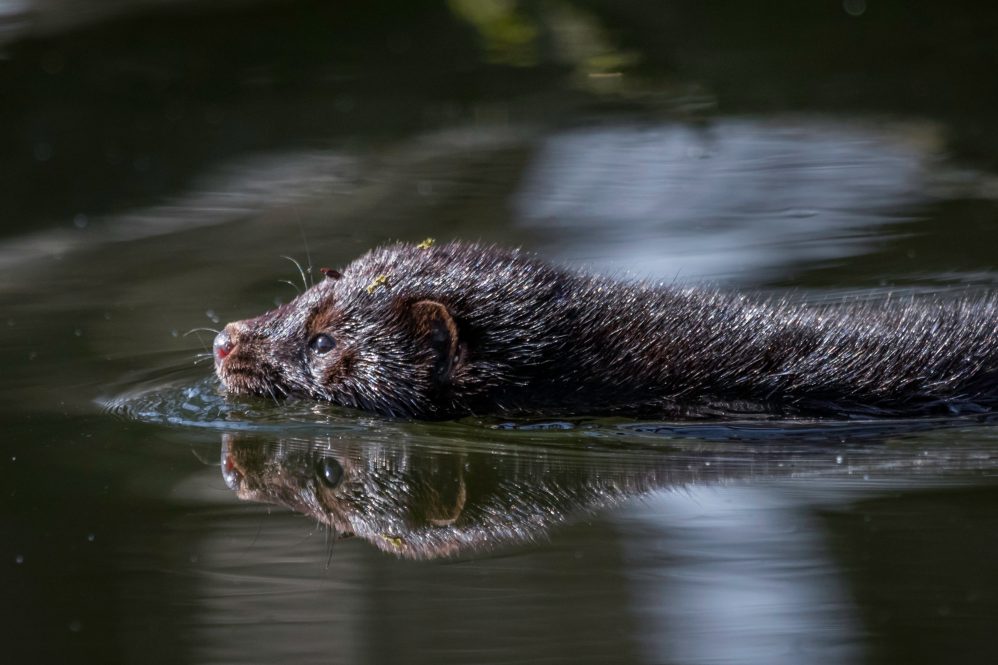
Their fur might feel the same, but a mink in the Everglades is not the same as a mink from northern Florida, researchers from the University of Connecticut and Central Connecticut State University report in the April 20 issue of Nature Heredity, which also ran a podcast discussing the research. The scientists’ findings could justify greater protections for the Everglades mink.
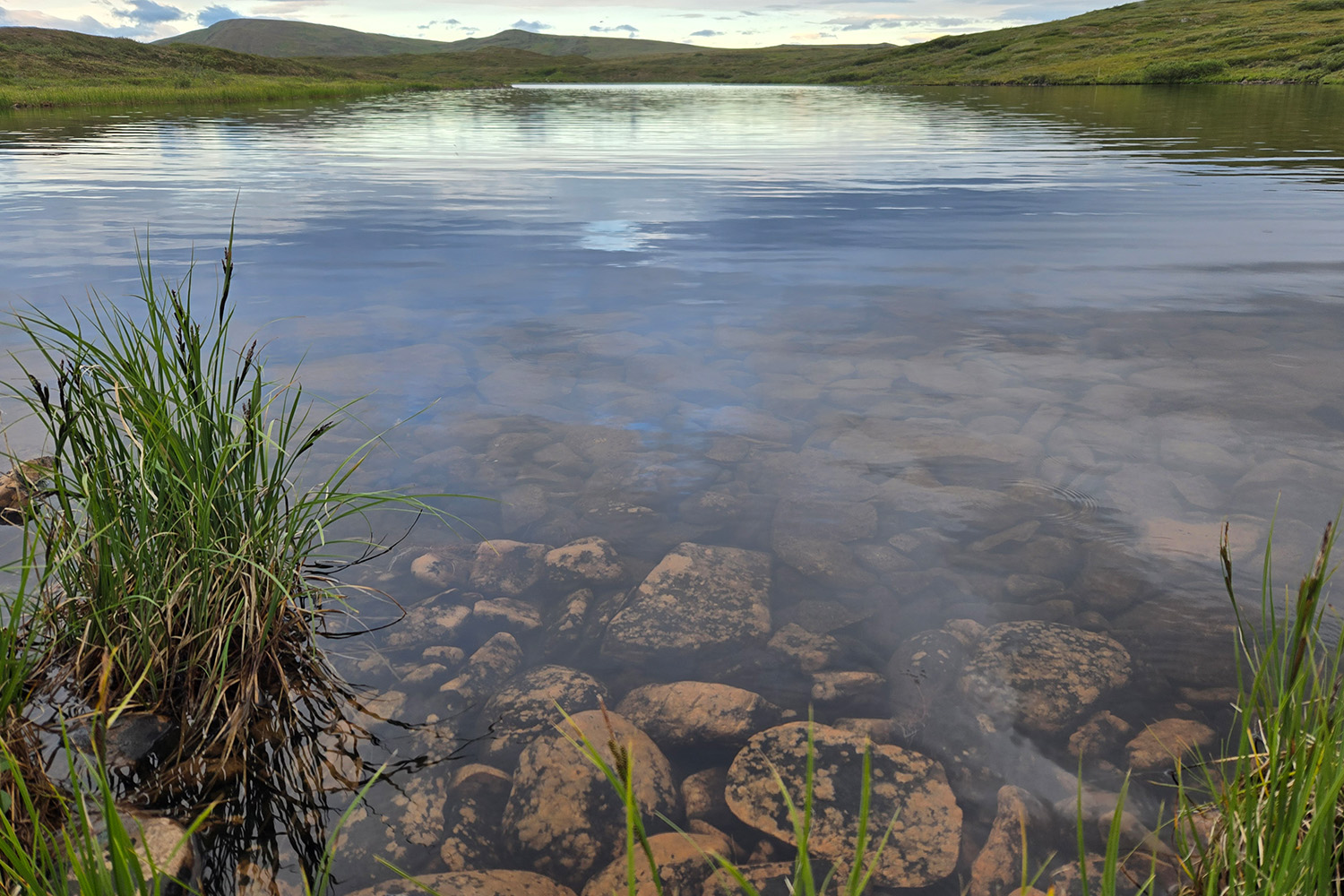
Mink resemble semi-aquatic ferrets, and are found almost everywhere in North America where there is water except the dry southwest. But in Florida, a state filled with lakes and rivers, mink are found in only three places, and those three are isolated from each other.
“Mink are really difficult to study,” says Paul Hapeman, a conservation biologist at Central Connecticut State University. “They have low detection rates using established methods. Florida Fish and Wildlife had cameras set out for several years and only got a couple of photos. Recent efforts have been a little more successful.”
Hapeman had been studying the mink along with Florida Fish and Wildlife, looking at the genetics of the animals. Past research had tentatively suggested that the mink in the state had diverged into three subspecies in the salty waters along the coasts and seasonally flooded wetlands of south Florida. Mink in the Everglades seemed particularly distinct—and vulnerable. If conservationists could show undeniable genetic differences between the three subspecies, it would go a long way towards supporting protection for them.
The University of Connecticut’s Institute of Systems Genomics (ISG) reached out to Hapeman. They were looking for a project for a team of students, and though Hapeman’s work with mink and genetic novelty could benefit from the collaboration. UConn computational biologist Jill Wegrzyn’s team specializes in decoding complete genomes of threatened organisms.
Mink was an unusual choice for Wegrzyn’s lab, which more commonly focuses on trees or species of ecological concern. Mink, known scientifically as Neogale vison, are considered invasive in Europe, where they have escaped from fur farms and begun breeding in the wild.
And mink already had a reference genome—sequenced from a British mink presumably descended from a farm escapee. Creating another reference genome would be a lot of work.
In fact, Wegrzyn and Hapeman wanted to go further and create a pangenome, fully sequencing the genes of multiple mink from three locations in Florida and one in Louisiana. Such a thorough look would be the best way to make the case that the three groups of mink were genetically distinct. But that kind of effort would require a big team of researchers.
Fortunately Wegrzyn, evolutionary biologist Elizabeth Jockusch, and other scientists at UConn’s ISG had just the thing: funding from the National Science Foundation for a Research and Mentoring for Postbaccalaureates in Biological Sciences (RaMP) cohort.
RaMP grants were intended to give research experience to students who had undergraduate degrees but hadn’t had the chance to do much lab work. Wegrzyn, Jockusch, and their colleagues assembled a team of students for the RaMP cohort. They would be trained in bioinformatics, or how to assemble and analyze a genome, using the mink as their subject. Hapeman provided the students samples from six different minks—two from each of the three tentative N. vison subspecies in Florida and Louisiana. The genome of each mink was compared to the others to see which genes, or families of genes, were missing or different. Their results reinforced what biologists had already suspected: the samples represented three distinct subspecies.
Some of the samples came from Hapeman’s lab during cooperative research with state wildlife agencies in Florida and Louisiana, and some of them came from mink specimens archived at the Florida Museum of Natural History. In the past, archived specimens were often too degraded to get usable DNA. But the students, and newer techniques they trained on, proved that isn’t the case anymore.
“This study also supports the value of natural history collections for conservation genomics,” says Wegrzyn.
Mink from the Everglades (N. vison evergladensis) were genetically distinct from mink from northeastern Florida (N. vison lutensis) and mink from the northwestern Gulf coast (N. vison vulgivaga). Evergladensis mink had genetic differences related to reproduction and sensory systems, which makes sense; Everglades mink breed at a different time of year than other mink, likely due to seasonal flooding in the Everglades. Their genome also indicated a high level of inbreeding, as much as other mammals considered critically endangered, such as white rhinoceroses and lowland gorillas. This suggested a recent decline in their population, possibly associated with an outbreak of canine distemper in the late 1990s.
N. vison vulgivaga had genetic differences related to oxidative stress and adaptability, possibly due to the constantly shifting salinity of their marshy habitat. And N. vison lutensis, found in the tidal estuary of northeastern Florida, had genes enriched for neurological development. Mink of this subspecies also have a noticeably different skull shape. Genetic enrichment of this kind has been linked to learning and behavioral flexibility in other marine mammals such as otters and dolphins.
The team also compared the British mink reference genome to their team’s pangenome, and found the reference mink had genetic changes related to immunity, suggesting farmed mink in Europe are adapting to the overcrowding and disease common on fur farms.
“The approach of using genomic data to assess subspecies classifications has tremendous potential to assist with status assessments and protections,” says Hapeman.
Beyond the scientific findings, the study illustrates the value of the RaMP training model: three of the co-first authors from this cohort – Airianna McGuire, Mary Rutter (current and incoming Ph.D. students, respectively), and Kyle Paist – remain involved in mentoring the current group of RaMP fellows at UConn.
The work was supported by National Science Foundation award DBI-2217100 to Elizabeth Jockusch, Jill Wegrzyn, and Rachel O’Neill. The 11 RaMP trainees: Aishatu Affini, Hailey Baranowski, Scott Forbes, Elena N. Foust, Kristyn Hatley, Ethan L. Ni, Airianna McGuire, Kyle Paist, Mary Rutter, Robin N. Smith, and Nataly Vargas, share co-first authorship on the paper.