On a day filled with hands-on discovery, community connection, and big ideas, UConn Waterbury welcomed almost 1,500 attendees to WISHfest 2026, the fourth annual celebration of innovation, sustainability, and health. This year’s festival brought together students, families, educators, community partners, staff, and volunteers to explore what WISHfest calls “Innovation, Inclusion, and a Healthier Future.”
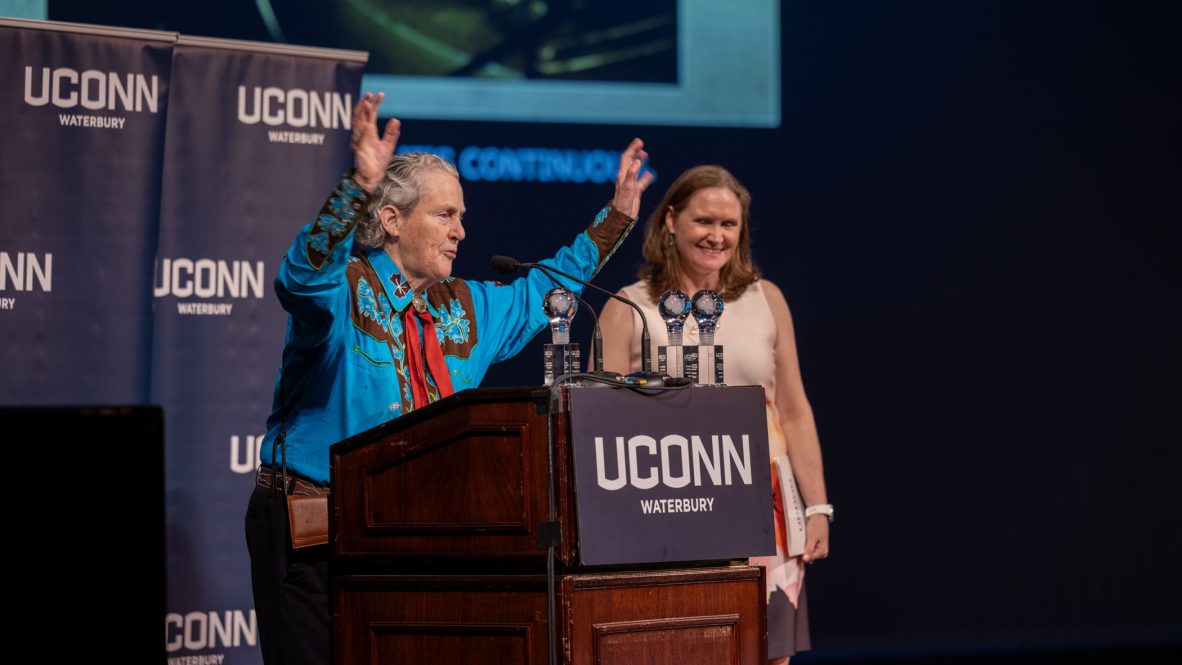
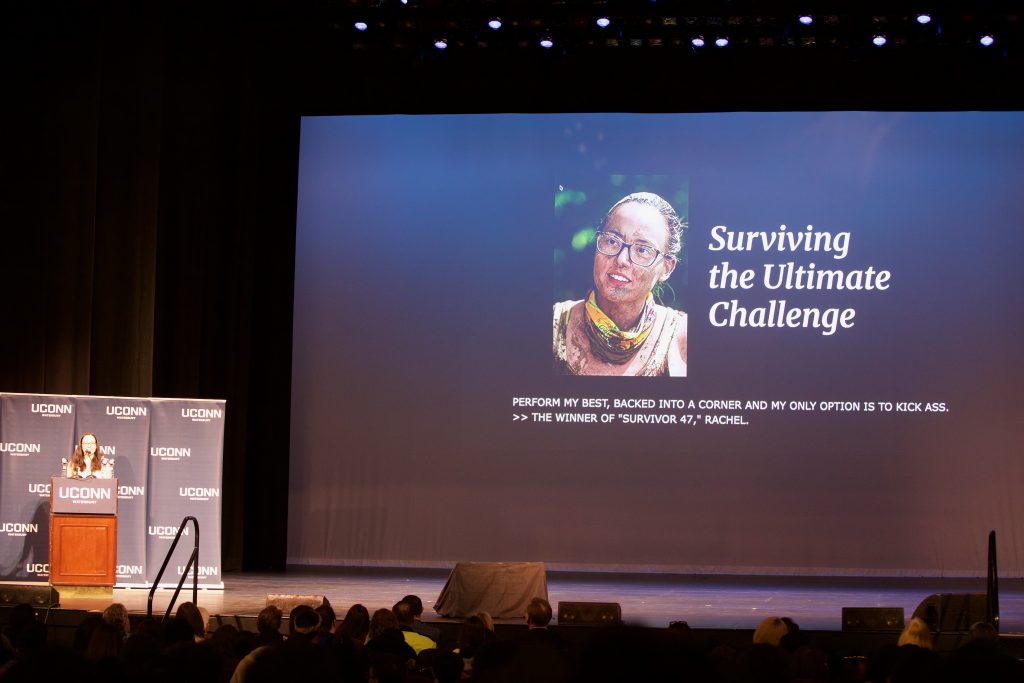
The citywide event began at the Palace Theater, where attendees heard from keynote speakers Temple Grandin, the renowned autism advocate and animal behavior expert whose life story was brought to the screen in the HBO film “Temple Grandin,” and Rachel LaMont, winner of CBS Reality TV show Survivor 47. The morning portion of the program concluded with a fireside chat moderated by Kristen Govoni, UConn’s 2026 Reed Fellow and associate dean in the College of Agriculture, Health and Natural Resources. In opening remarks, Campus Dean Fumiko Hoeft described WISHfest as a day to cultivate “creativity,” “partnership and friendship,” and, above all, “possibility and our future.” UConn President Radenka Maric reinforced that theme, reminding the audience that “This event is not only about putting people on the stage. It’s about connections.”
Together, Grandin and LaMont delivered a message that felt especially relevant for the middle school and high school students in the audience: think differently, trust yourself, keep adapting, and do not let failure define you. Grandin made the case for neurodiversity as a real strength, telling attendees, “We need the skills of people who think differently. We need them.”
LaMont offered a complementary message about resilience, saying, “The reason that I won is because every loss came with a lesson.” During the fireside chat, both speakers returned to the importance of perseverance, mentorship, and learning through setbacks. As with last year, Waterbury Arts Magnet School’s digital media team played a significant role in photographing, videotaping, and supporting the event’s visual storytelling.
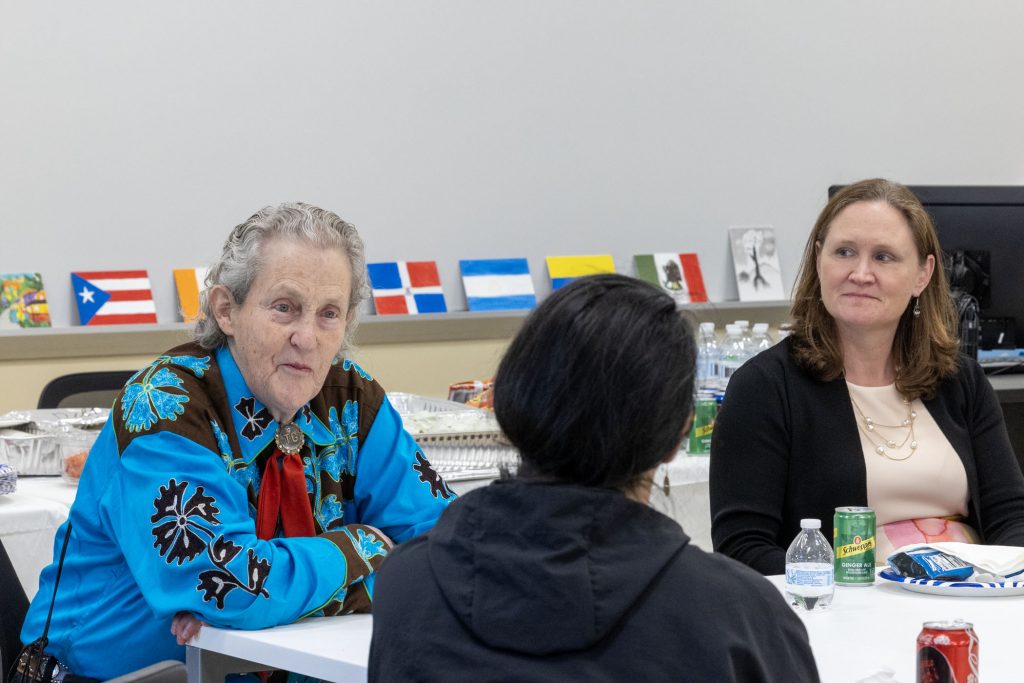
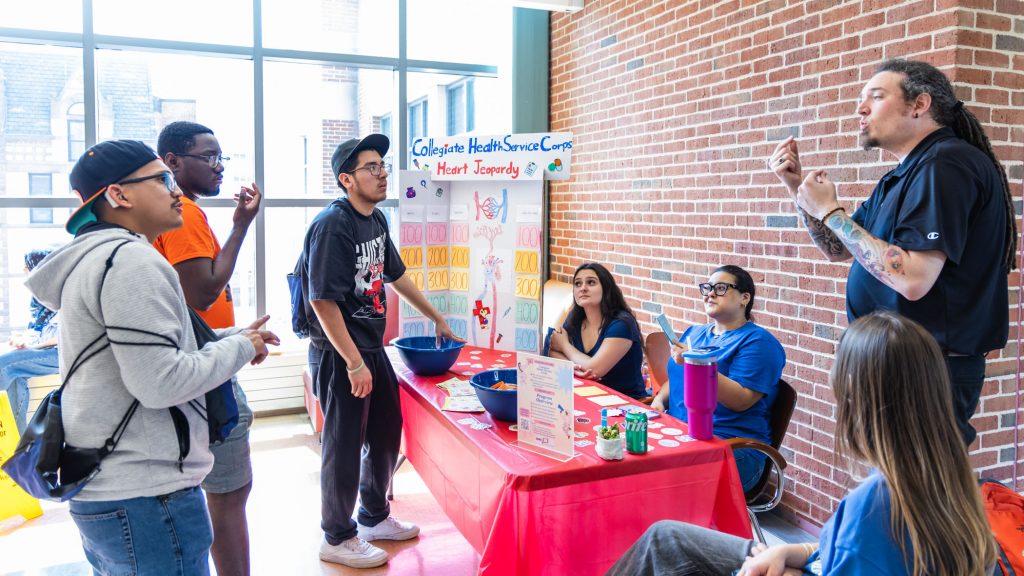
Following the morning program, the UConn Waterbury campus was transformed into an interactive showcase where students, families, educators, and community partners explored exhibits spanning science, technology, the arts, health, and inclusive design. From virtual reality demonstrations to sensory-friendly activities, each space invited participants to engage, learn, and connect.
This year’s festival also deepened its emphasis on accessibility and inclusion. In addition to intentionally inclusive exhibits and enhanced captioning, WISHfest welcomed students from the American School for the Deaf in West Hartford, as well as attendees from Mileva Maric Montessori School in West Hartford, including children as young as 6. The result was an event that widened participation not just in theory, but in practice.
“We’ve been very intentional about making sure everyone feels welcome and able to engage,” said Monica F. Lattimer, co-director of WISHfest and associate director of operations at UConn Waterbury. “Accessibility isn’t an add-on for us; it’s central to how WISHfest is planned and delivered.”
That commitment resonated throughout the day. “As a high school student, I had the opportunity to attend WISHfest, and it was a great experience,” said Cristian Cortes ’29, a student at UConn Waterbury. “I enjoyed the presentation they gave in the Palace Theater and the activities on the school’s campus. Now that I am a student of UConn, I was more than happy to volunteer for WISHfest because I knew how great it was going to be again and I wanted to be a part of it.”
For many exhibitors, WISHfest offered an opportunity to connect directly with the community in a meaningful and impactful way.
“WISHfest is a great opportunity for Waterbury Public School (WPS) students and others to get to know the UConn Waterbury campus, a resource that’s right in their backyard,” said Liliana Oliviera, program coordinator and adjunct professor. “This year, my students had the chance to present their majors at our booth, and it reminded them of where they once were not too long ago. It gave them a chance to offer guidance and share the information they wished they had when they were in high school. As for our WPS students, I hope they got the chance to see who we are, what we have to offer, and to hopefully picture themselves on this campus in a few years.”
An educator, Kate McElderry, director of outreach at The Odyssey School in the Baltimore-D.C. area, who has flown in for the event for three years, said: “What a fabulous WISHfest conference… I am still glowing for the event—it is truly the BEST learning opportunity I attend each year.”
Michael Tierney, a librarian at the Silas Bronson Library in Waterbury, agreed: “Can’t beat WISHfest with its great food, fun exhibits and interesting people. If you missed it, there’s always 2027!”
WISHfest 2026 also reflected the values at the heart of UConn Waterbury’s Neurovariability Initiative, a campus‑wide effort that rethinks learning through the lens of cognitive strengths, neuroscience, and inclusive design. Grounded in the belief that differences in how people think and learn are assets rather than obstacles, the initiative has influenced how the campus approaches teaching, engagement, and community partnerships. The themes emphasized throughout the day (thinking differently, building on strengths, and creating environments where all learners can thrive) mirrored this broader institutional commitment.
That connection was especially evident in the selection of speakers and programming. Grandin’s message that innovation depends on people who “think differently” closely aligns with the Neurovariability Initiative’s focus on recognizing and elevating diverse cognitive styles. Rather than framing difference as something to be accommodated after the fact, both the initiative and WISHfest emphasize proactive design; creating experiences that are accessible, engaging, and empowering from the start.
By embedding these principles into a highly visible, community‑centered event, WISHfest serves as a living example of how the Neurovariability Initiative extends beyond the classroom. From sensory‑friendly activities and inclusive exhibit design to intergenerational learning experiences, the festival demonstrates how strength‑based, neuroinclusive thinking can shape spaces where curiosity, creativity, and connection flourish for everyone.
Mayor Paul K. Pernerewski Jr. captured that spirit in his remarks, saying the theme reflected “exploring new ideas, embracing diverse perspectives, and working together to build a stronger, healthier community for everyone.”
“Once again, WISHfest has proven to be an invaluable experience for our students in the Waterbury Public Schools,” said Darren Schwartz, superintendent of Waterbury Public Schools. “UConn Waterbury has delivered a powerful opportunity for our students to hear from amazing speakers and engage in hands-on activities on the UConn Waterbury campus to explore, discover, and learn.”
As it has since WISHfest launched in 2023, this year’s event also included a livestream option, expanding access beyond those able to attend in person. Organized through a collaborative effort among UConn Waterbury, the City of Waterbury, Waterbury Public Schools (WPS), and numerous campus and community partners, WISHfest continues to grow as a signature initiative centered on innovation, inclusion, and public engagement.
We’d also like to thank our sponsors: Dr. David and Joan Reed, Cathy & Jim Smith, The Coca-Cola Company, Dunkin’ (535 Watertown Ave, Waterbury), Mattatuck Museum, Northwest Regional Workforce Investment Board, Osher Lifelong Learning Institute at UConn Waterbury, NSF TRANSCEND Ph.D. Training Program, UConn College of Agriculture, Health and Natural Resources (CAHNR), and USDA/NIFA NextGen Program.