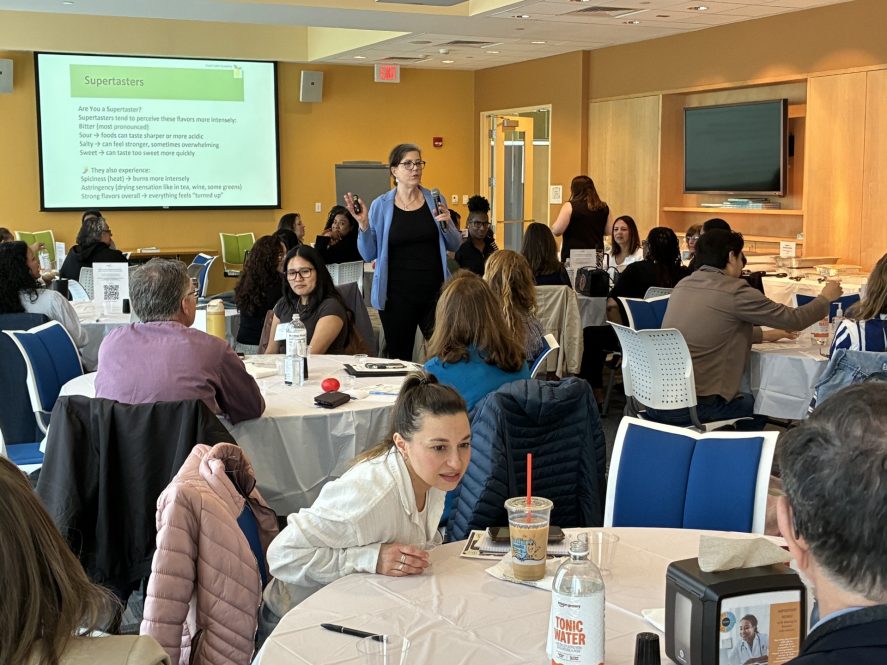
“Food is Medicine is not a food benefit, it is a health intervention,” Dr. Deb Kennedy, founder of the Food Coach Academy, told 49 attendees who came from a variety of health and social service agencies to learn how they could better support healthy eating habits in their communities. The workshop was sponsored by the Connecticut Area Health Education Center (CT AHEC) based at UConn Health in Farmington.
“We were proud to sponsor the Food as Medicine event, as it brought our healthcare and community partners together to explore ways to promote healthy eating habits among their patients and clients,” said Petra Clark-Dufner, director, CT AHEC. “This event directly supports AHEC’s mission of connecting local community groups with UConn Health and other health professionals.”
The Community Health Center, Inc. (CHC) in Middletown was the perfect location for the event because it serves as a hub for nutrition support in the community. “We treat access to healthy food as essential healthcare,” said Amanda Schiessl, chief of staff at the Moses/Weitzman Health System at CHC, “so we were happy to facilitate this workshop.” CHC partners with local farm markets, supports community and school-based gardens and refrigerators, provides health programs for farm workers, and has a rooftop garden at their Middletown facility and is in the process of building an adjoining greenhouse.
CHC’s efforts are foundational to what Kennedy showed the audience they need in order to build healthier communities. “The Food is Medicine interventions include providing food that supports health, such as medically tailored meals or groceries, or food assistance such as vouchers or produce prescriptions,” said Kennedy, “a connection to the healthcare system is always required.”
Kennedy framed the workshop around competencies healthcare and community service providers need to support their patient’s food choices. This included instructions on how to conduct a Food Coaching Conversation and steps to becoming a certified Food Coach. “Food coaching is a patient-centered, culturally appropriate, flavor-driven approach to food-behavior change and is based on motivational interviewing techniques,” said Dr. Kennedy. “You want people to take small baby steps because that is what’s sustainable.”
Attendees had the opportunity to practice a simple two-question food coaching conversation. After acknowledging that the ultimate power belongs to the client they were instructed to ask: “If you could wave a magic wand and wish for one change in your diet right now, what would it be?” And “What is one small change you could make this week to start moving toward that goal?”
“I found this exercise and the emphasis on using motivational interviewing techniques when discussing nutrition with patients to be highly practical,” said Amisha Parekh de Campos, Ph.D., MPH, RN, CHPN, assistant clinical professor at UConn’s Elisabeth DeLuca School of Nursing. “In my work in palliative care, discussions around food choices and preferences are not always prioritized, yet they are an important aspect of holistic care. This event highlighted the need to integrate these conversations more intentionally into practice.”
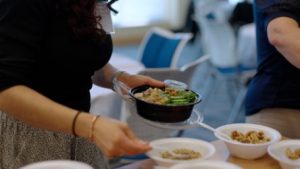
Kennedy also explained how to translate the recommended food guidelines into real life practice, while considering the need to support culturally grounded meal adaptation. To illustrate the importance of choices, a “Build Your Bowl” exercise with three food stations was set up with a variety of food options that included greens and grains, protein, and a flavor station where there were options to dress the food bowl with Hispanic, African, or Asian sauce. “The interactive component—preparing our own lunches using simple ingredients with culturally diverse toppings and dressings—was particularly engaging and highlighted for me the importance of asking about a patient’s food preferences and incorporating them into the healthy diet discussion,” said Parekh de Campos.
Geneva Williams, founder of the Ollie M. Williams Community Health and Wellness Fair, agreed that the “Build Your Bowl” exercise was one of the highlights of the day and plans to incorporate this activity and pop-up nutrition information and cooking sessions into this year’s fair. “The Food as Medicine event was powerful and eye-opening, highlighting how food deeply influences health by preventing disease and supporting healing,” she said. “It connected education, access, and culture, emphasizing nutritious, affordable, and culturally familiar foods for all.”
Dr. Anton Alerte, professor of Pediatrics and associate dean of Primary Care at UConn School of Medicine, and Kimberly Tschetter, PA-C, ended the workshop with a discussion on how to recognize and overcome the common barriers to adopting healthy food choices into the community. Barriers mentioned included access to transportation to culturally relevant food, food deserts, access to a functioning kitchen, lack of knowledge about food choices and food preparation, and poverty. Abdul Rahmaan I. Muhammad, executive director of My People Clinical Services, identified poverty as a significant barrier in Connecticut communities. “When you have $50 a week to spend on food you buy what you can,” he said.
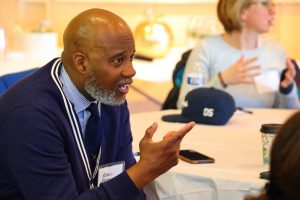
Tschetter agreed poverty is a significant barrier that is best addressed through community partnerships. “Working together to bring resources that include not only food, but nutrition education and cultural sensitivity are the cornerstone of successful partnerships,” she said. “You can’t just tell people to eat better, you have to practice active listening, provide education, and partner with community members who can provide the resources people need to eat healthy foods.”
When asked what was needed to address these barriers, collaboration around connecting patients with resources was important. “Access is key, along with education and meeting people where they are,” said Tschetter.
Dana Evora, a patient navigator with the Hispanic Health Council, encourages clients to participate in nutrition classes that focus on eating healthy on a budget, cooking skills, and food literacy. “People don’t cut back on using salt because they can’t imagine cooking without it,” said Evora. “You need to provide experiences where people can learn this lesson on their own and know it is possible.” The Hispanic Health Council offers community cooking classes that offer the opportunity to make and taste reduced-salt meals so people can see that you can make flavorful meals with less salt.
UConn’s Alerte reminded the group that small changes like this can have a big effect on overall health and do make a difference.
Williams summed up the day by saying “this event fostered community, through expert talks, demonstrations, and practical strategies, making the message real and achievable. It reinforced that treating food as medicine empowers everyday health control.”