Growing plants successfully starts from the ground up — literally.
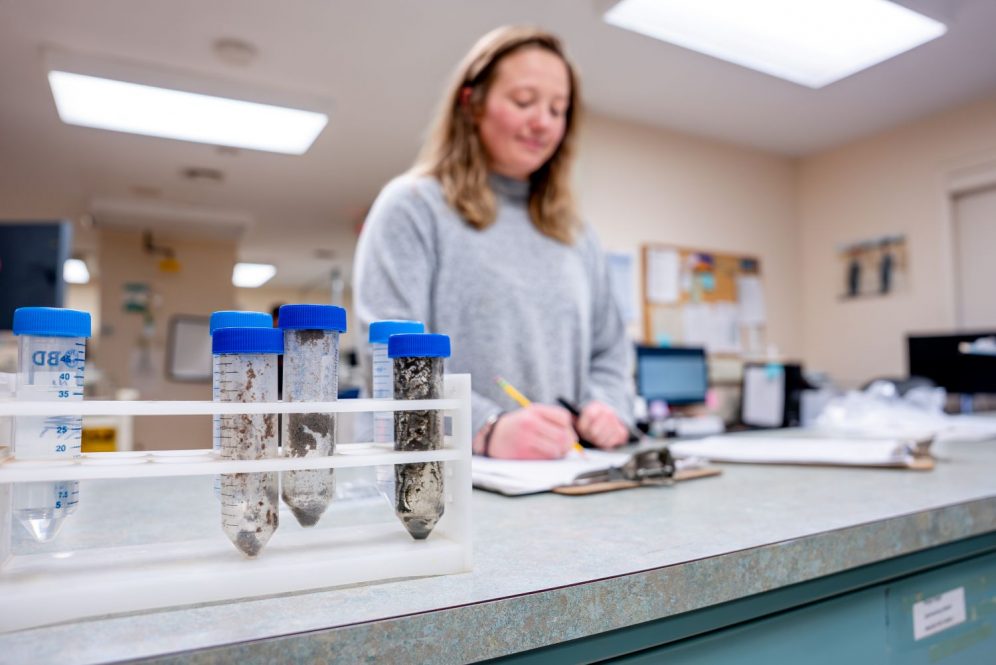
Soil health is a critical component of plant health. The Soil Nutrient Analysis Laboratory in the College of Agriculture, Health and Natural Resources (CAHNR) provides a suite of services to farmers and gardeners in Connecticut and beyond to help them understand their soil.
Each year, the lab processes approximately 14,000 samples for residential and commercial clients. The lab is located within the newly opened George Leigh Minor Plant and Soil Health Center, a hub for students and the public. The Minor Center is also home to UConn’s Plant Diagnostic Lab, Turfgrass Diagnostic Lab, and Home Garden Education Office.
The lab offers a series of affordable soil nutrient analysis services starting at just $5. The lab can measure soil pH, major plant nutrients, several micronutrients, and lead. Lead in soil is an important public health concern, especially in older and previously developed areas. Lead contamination in soil is a serious public health concern, especially in older and previously developed areas.
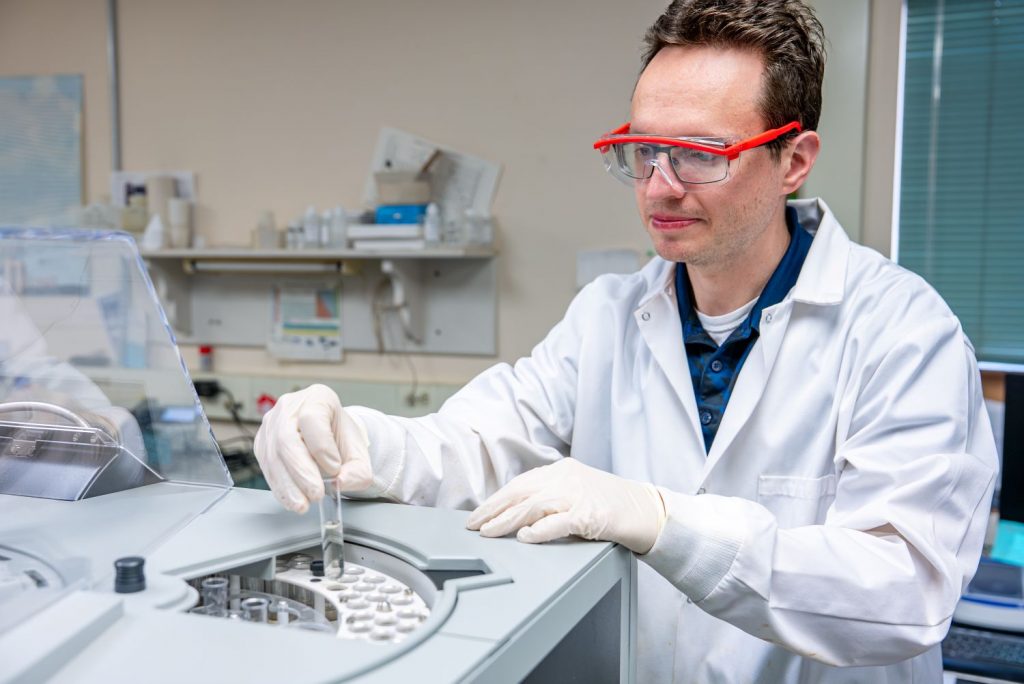
Detailed soil analysis helps growers better understand their actual fertilizer needs. Using only what is needed can reduce nutrient losses to waterways, which can contribute to water pollution and related environmental problems, while also saving money.“The value clients get from soil testing is far greater than the cost of the test,” says Avishesh Neupane, assistant extension professor of soil science and director of the Minor Center. “It helps people protect the environment while also saving money.”
Soil testing methods differ across the country. Because Connecticut soils are generally acidic, labs in this region use different extraction methods than labs working with more alkaline soils elsewhere. The Modified Morgan extraction used in this region grew out of soil test methods first developed in Connecticut in the early 1930s by M. F. Morgan.
“Soils vary widely, so labs need regionally appropriate methods and research-based calibration to make sound lime and fertilizer recommendations,” Patrick McIntosh, the technician for the lab, says.
UConn is part of the Northeast Coordinating Committee on Soil Testing, a consortium of regional universities that came together to develop soil testing guidelines for the area.
“The recommendations we provide were developed specifically for Connecticut and the Northeast,” Neupane says. “They are based on work done in this region and are tailored to the crops and soils here.”
The laboratory traces its roots back roughly a century and was already providing practical soil testing support through UConn Extension work by the late 1920s. In its early decades, the lab mainly served farmers and agronomic producers.
“From the 1950s through the 1970s, there was strong demand among agronomic producers,” McIntosh says. “A major purpose of the lab was to support agricultural production.”
Today, the lab serves a broader constituency including farmers, home gardeners, homeowners, commercial clients, and UConn research projects.
“The public has taken a huge interest in soil testing,” McIntosh says. “People want to know what’s in their lawn, garden, flower beds, or commercial property.”
While most customers are Connecticut residents, the lab receives samples from around the region and across the country.
In the new Minor Center facility, the lab is expanding services to include compost analysis and soil adsorbed metal testing.
“These services are here to help [the public],” McIntosh says. “It’s a low-cost service that can improve the health and success of their landscapes. We are a service lab, but we are also here to educate the public and help people make informed environmental decisions.”
This work relates to CAHNR’s Strategic Vision area focused on Ensuring a Vibrant and Sustainable Agricultural Industry and Food Supply.
Follow UConn CAHNR on social media