Dr. Harold Moskowitz is 90, losing his vision, and no longer drawing a salary, but, motivated by a “love of teaching,” he still shows up to UConn Health a couple times a week to mentor trainees.
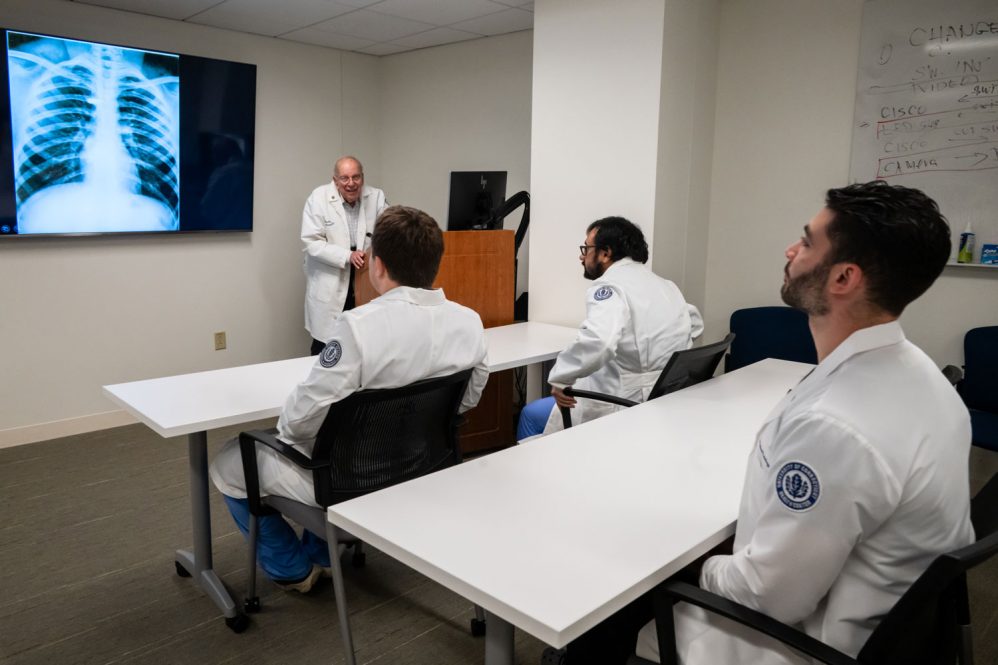
A professor emeritus since his retirement in 2016, Moskowitz primarily gives lectures for students and first-year radiology residents. His time at the UConn School of Medicine goes back to 1969, when he joined the faculty part-time while building the radiology department at Mount Sinai Hospital in Hartford.
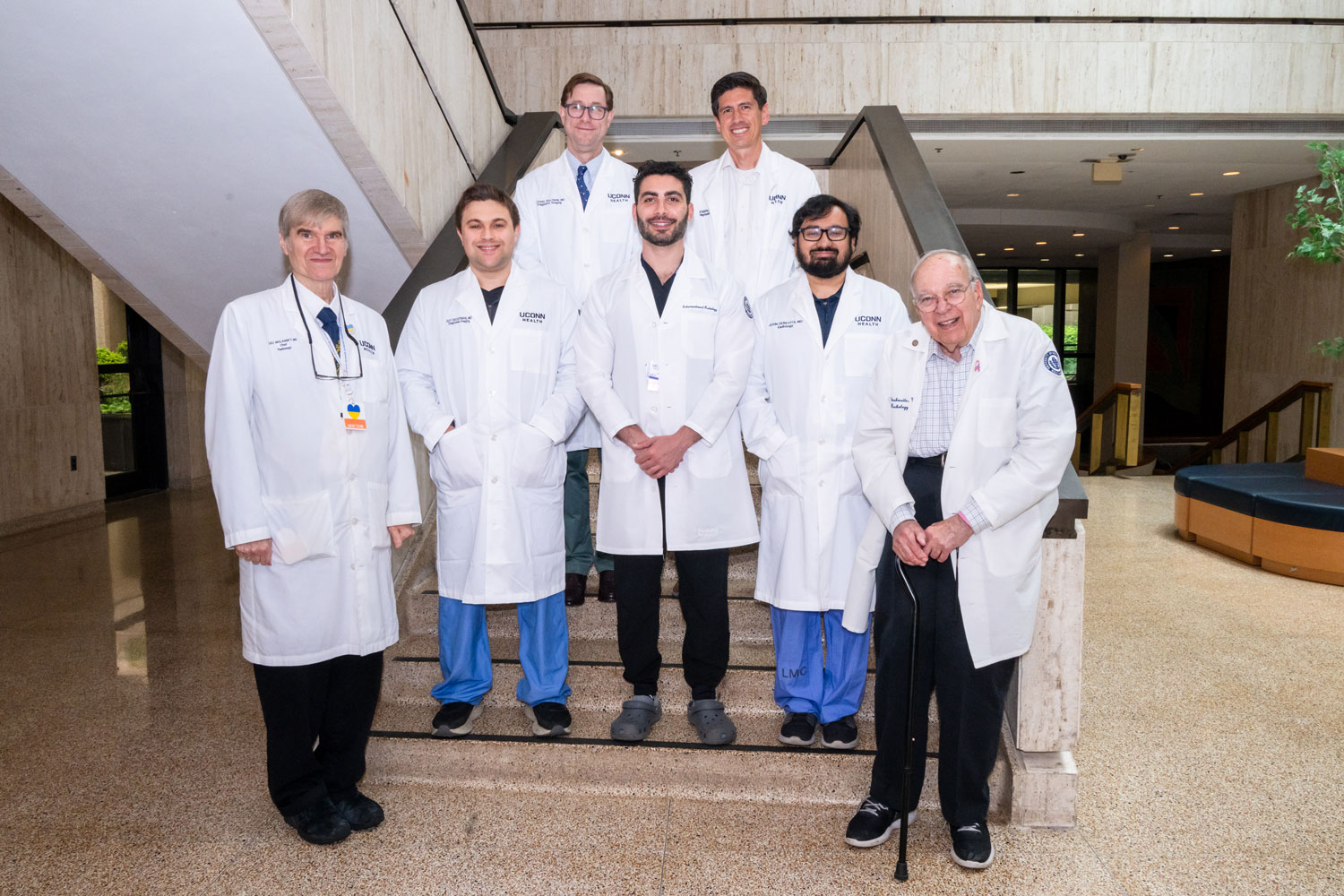
“I’ve always enjoyed working with medical students and residents, trying to teach the things that I’ve learned during my career,” Moskowitz says.
“He’s super passionate about radiology and teaching and medicine, and he has such an amazing range of experiences in radiology,” says Dr. Aakash Jain, who recently completed his first year of residency. “He helped pioneer a lot of the foundational parts of radiology and has a lot of interesting stories about that. And then obviously, clinically, he’s seen everything and pretty much done everything. He’s a really great resource.”
Moskowitz estimates he’s read more than 100,000 X-rays.
“I was one of the early angiographers,” Moskowitz says. “I was one of the early people who did mammography, and we’ve saved thousands of people’s lives, and we started the Society of Breast Imaging.”
Today, four decades later, the Society of Breast Imaging has more than 4,200 members and its biannual meeting draws radiologists from around the world.
“He’s really focused on teaching us the fundamentals of radiology,” says Dr. Guy Gechtman, also now in his second year of residency. “Just to hear his perspective on his 60-year-long career in radiology, it’s been great, all the wealth of knowledge and experience that he has to share with us.”
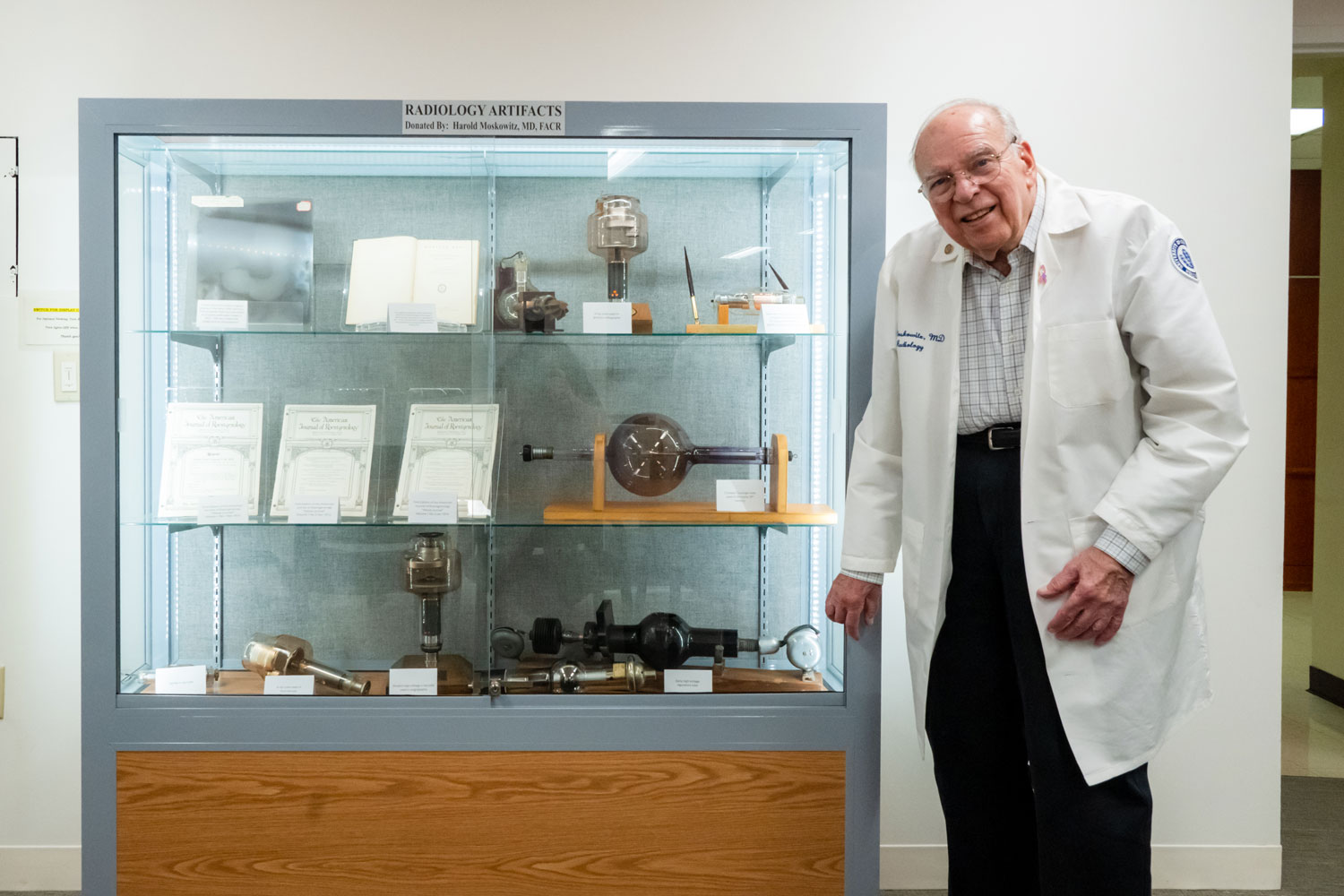
Moskowitz grew up in New York City and graduated from the SUNY Downstate College of Medicine in Brooklyn in 1959. He completed a one-year internship at what was then the Brooklyn Jewish Hospital and a four-year radiology residency at Jefferson Medical College in Philadelphia. He served two years as a medical officer the U.S. Army, stationed on the Japanese island of Okinawa. He then returned to Downstate as a member of the faculty, where he would run the angiography lab at both its new university hospital and nearby Kings County Hospital, from 1966 to 1969.
“Radiology is a driver; because of its ability to look inside the human body, it has a unique perspective, and its growth has been incredible, and the technology is so incredible now,” Moskowitz says. “When I started in radiology, the things we can do today are beyond even my wildest expectations what the future world holds.”
But he notes, with the advances in technology came a diminishing of the interpersonal relationship between physician and patient, especially over the last 10 years, with the COVID-19 pandemic accelerating that trend.
“Today’s resident sits in front of a computer screen and dictates,” Moskowitz says. “When I was training, we often would go out and look and talk to and interview the patient and even potentially examine them to decide what X-ray tests we were going to do.”
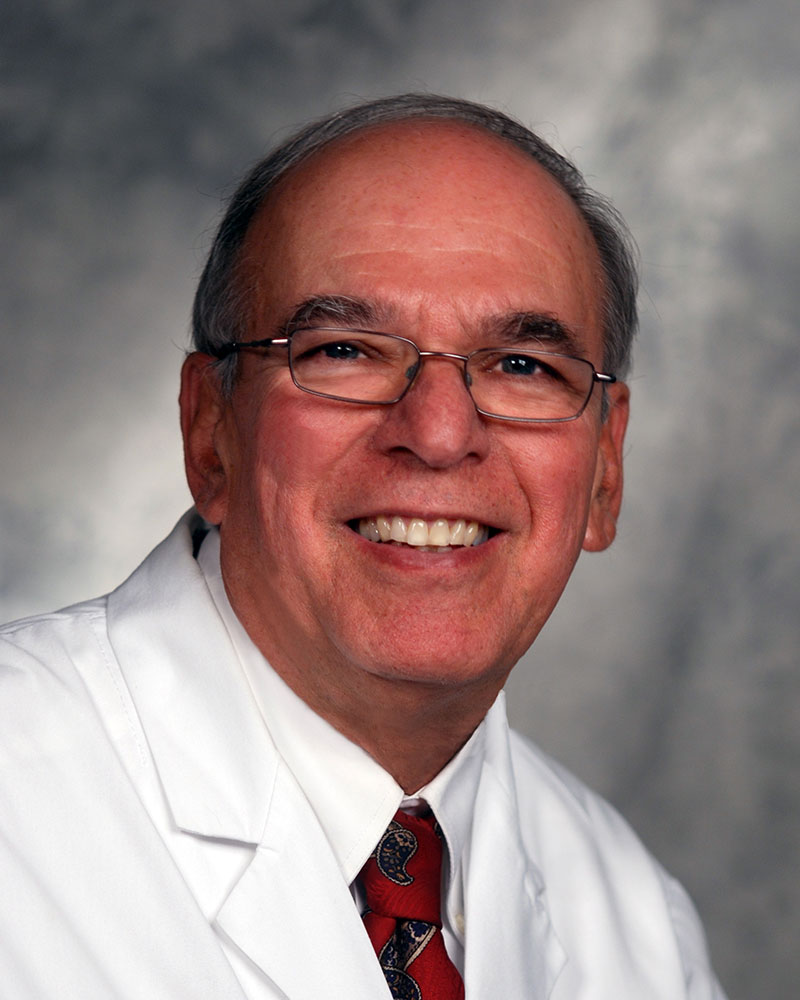
Moskowitz left the UConn School of Medicine faculty in 1972; he returned full-time in 2000, and soon he would establish radiology electives, create a summer radiology rotation for rising second-year students, and, perhaps most noteworthy, retool a struggling radiology residency program.
Dr. Nadav Mortman ’22 MD, a fourth-year resident, recalls his early impression during his first year in the program.
“There is this retired attending who wants to use his free time to come here and teach, and immediately you understand it’s because he’s extremely passionate about radiology, and teaching, and he cares about the future of radiology,” Mortman says. “He teaches not just how to make the diagnosis, but to look at the patient behind the image, as how you would want someone to look at your own family member.”
On the future of radiology, Moskowitz says, “When I started in 1960, we were hand-developing our own X-rays, and now an image is all automated, it’s all on computers, it all can be transmitted anywhere around the world. And artificial intelligence is going to change the whole thing. I think it’s going to take away a lot of the reading from the doctors. AI is going to read the X-rays. It’ll be interesting to see what happens. I hope I’m around to see it. But even now, a significant percentage of X-rays are looked at by AI.”
Moskowitz and his wife, Jan, live in West Hartford, in the house they bought when they moved to Connecticut in 1969. She drives him to UConn Health so he can continue to work.
“It was my calling right from the beginning,” Moskowitz says. “My wife says that I’m one of the very fortunate people on this earth, because I love my job. I’ve always loved it. I never wanted to retire.”
Earlier this year Moskowitz published his autobiography, “Behind the X-Ray: A Radiologist’s Journey,” available on Amazon.