UConn Health has a group of employees who have committed to an additional role: that of “ambassador.”
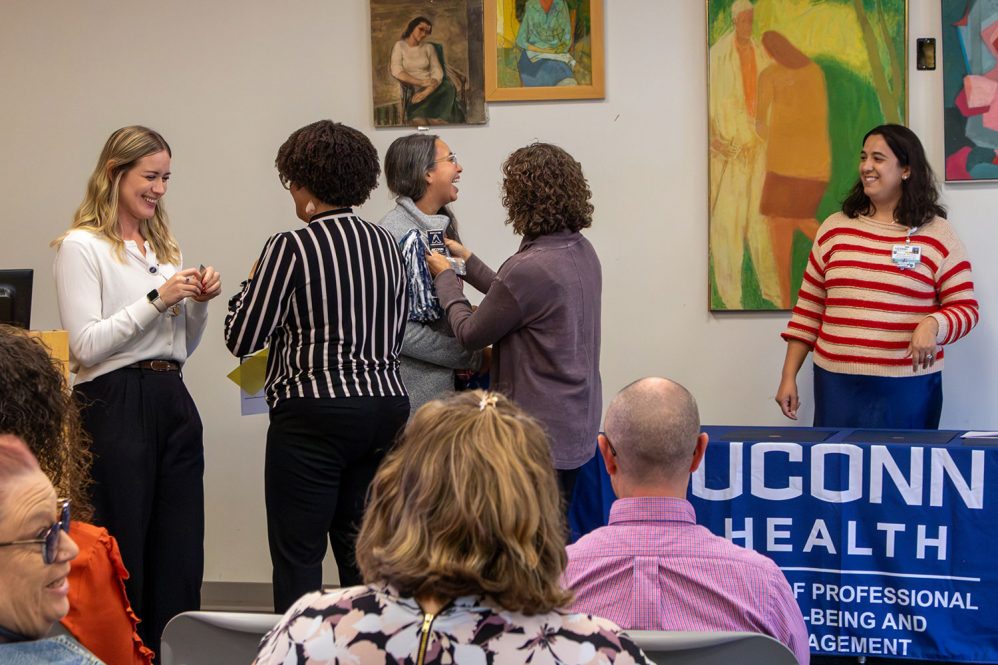
The Office of Professional Well-Being and Engagement started the Ambassador Program in 2024, and celebrated its ambassadors with a pinning ceremony Oct. 7, midway through Employee Appreciation Week.
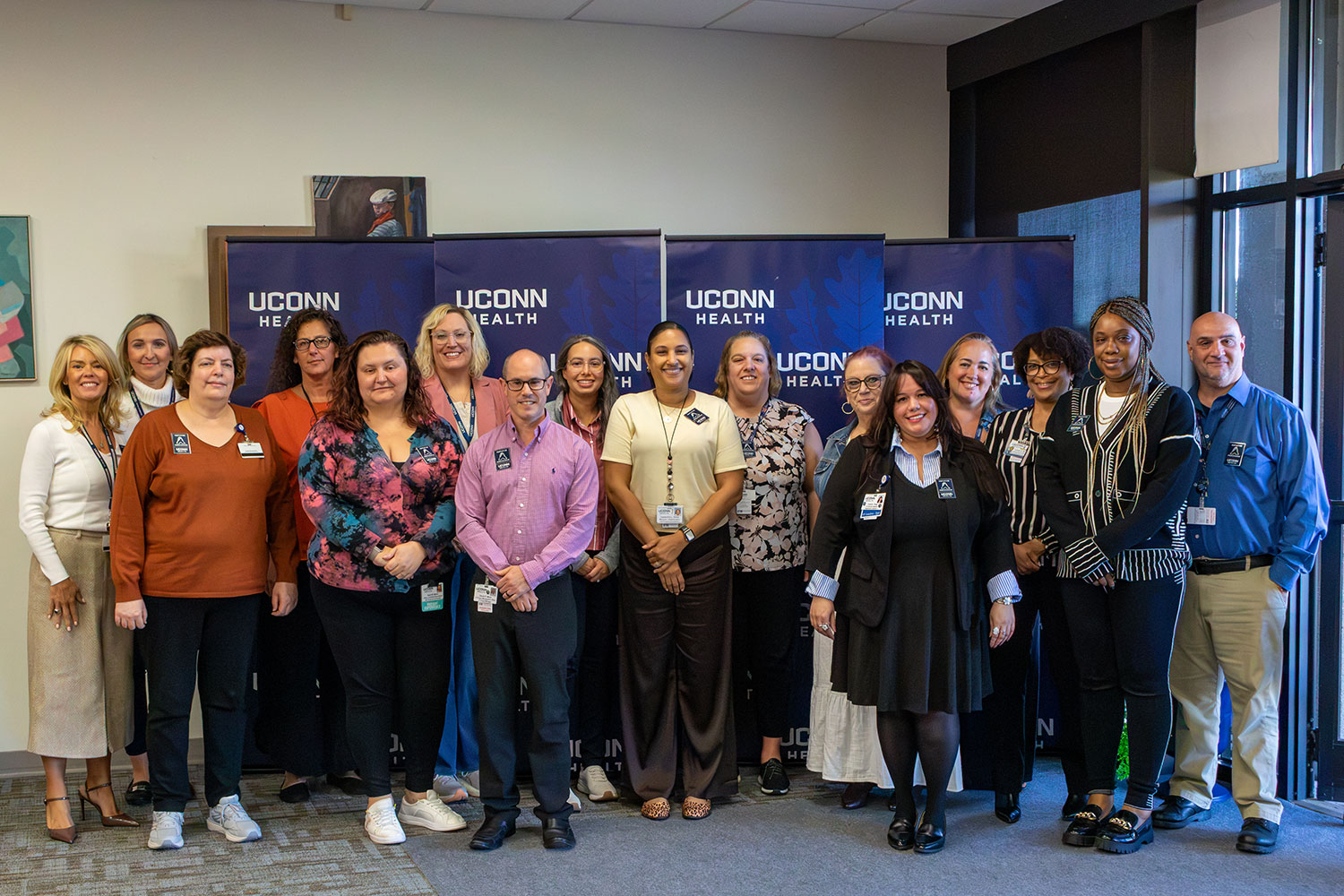
Ambassadors attend meetings monthly, take part in professional development sessions quarterly, build connection by promoting events and programming in their work area, and collaborate on community impact projects.
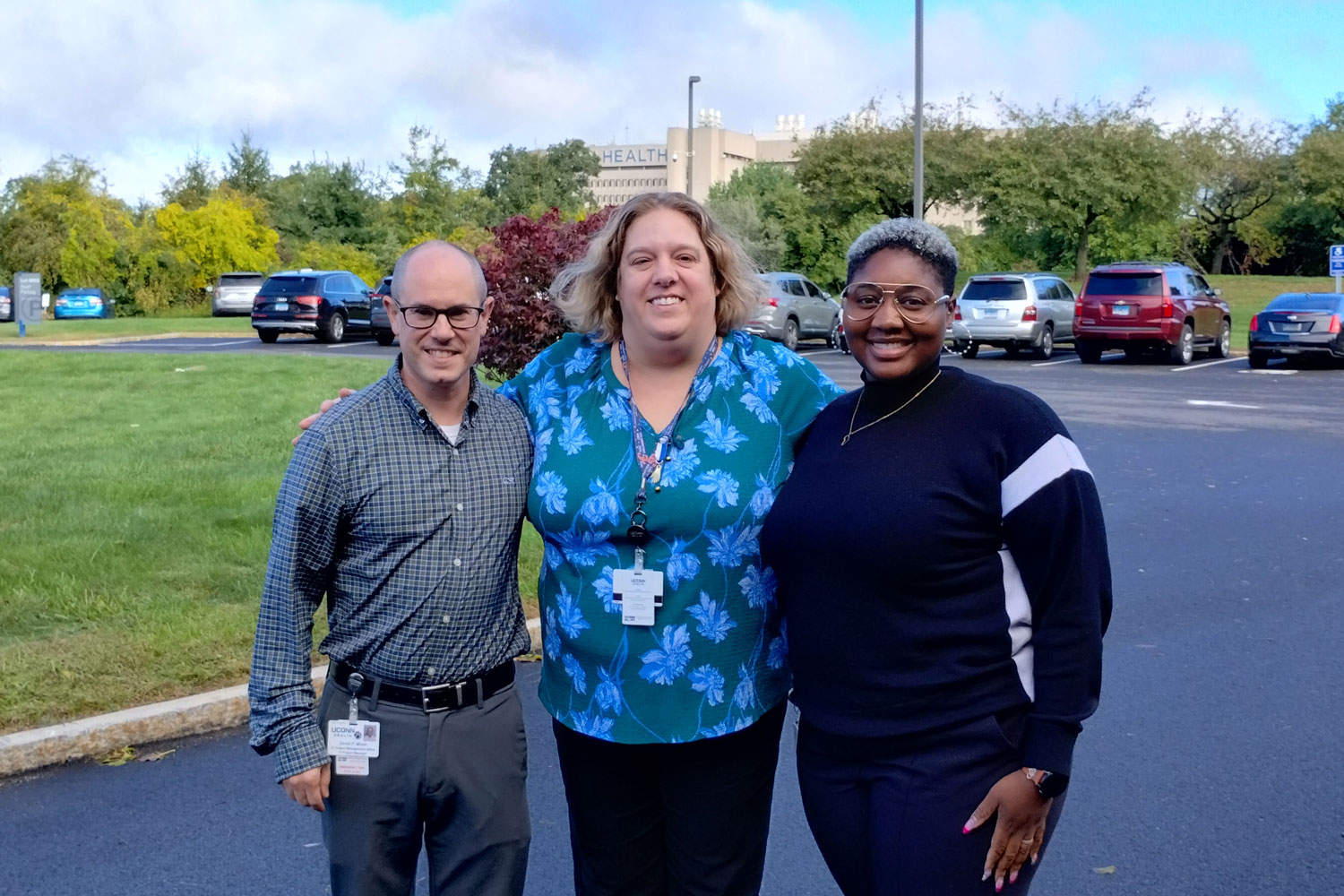
“It’s really a program that highlights community, it highlights impact and ways in which you can really get involved with UConn Health outside of your everyday responsibilities,” says Kara Wright, a patient access training specialist who’s been an ambassador for nearly a year. “There are so many different people from different departments who come in, you can learn from them, grow from them, understand different aspects.”
Alison O’Connor is an education and development specialist in the Office of Professional Well-Being and Engagement, a division of UConn Health’s Human Resources Department. She says the original vision for the Ambassador Program was to bring together employees from different locations, divisions and backgrounds to create a community that promotes and supports employees and a sense of belonging and connection outside their regular job titles.
“What’s come of that is a strong and engaged group of employees that’s continuously growing,” O’Connor says. “The difference and impact of this community stretch beyond what we thought was capable. We’ve had time to learn about each other, grow closer, and continue to build and promote a culture of belonging together.”
Laura LaRosa, a coding and documentation integrity manager, has been with the Ambassador Program since its inception.
“A lot of it is like, ‘What can I do to help move UConn forward?’ I’ve been here 14 years, in different roles,” LaRosa says. “How can I help contribute to the positivity and the growth?”
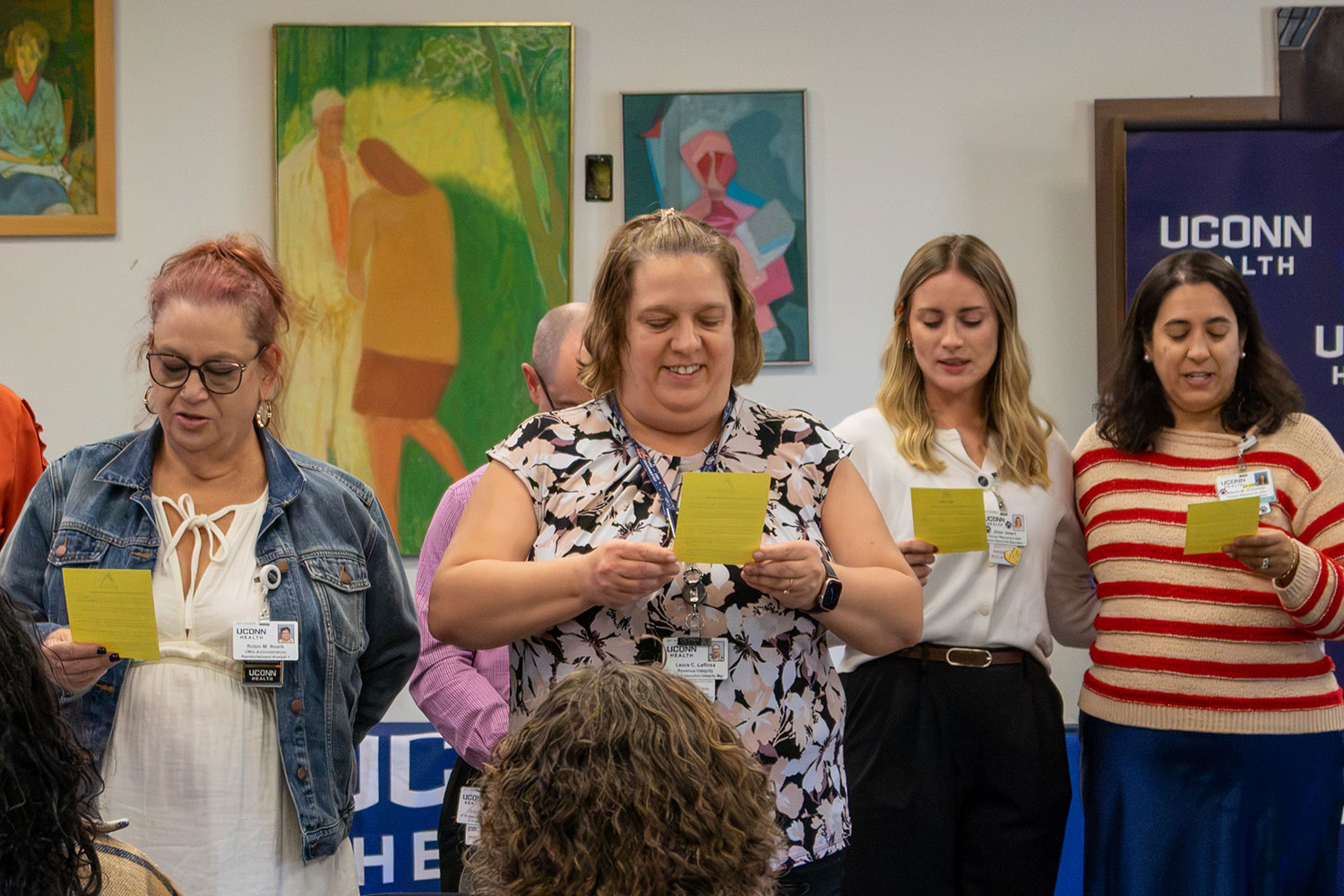
O’Connor and colleague Jill Hebert, engagement and well-being specialist, are the liaisons for the Ambassador Program, which now has 37 ambassadors. They say the pinning ceremony will happen annually to celebrate the new ambassadors who’ve joined and to give them a pin to wear to the programming they support to symbolize their role in the community.
“We recognize the work of the group, often behind the scenes,” Hebert says. “The pinning celebrates the helpers, dedicated to our mission of celebrating and connecting others.”
David Miner, an information technology project manager, also goes back to the start of the program.
“I’ve always found getting involved is the best way to understand an organization,” Miner says. “To me, it was another opportunity to network and to understand all the other nuances outside of project management or the projects that get done in the IT sphere.”
LaRosa says the program enables more voices to be heard when it comes to organizing recognition events and other employee engagement efforts.
“When we celebrate UConn, there are certain folks who are inadvertently left out — not because there was any intention to leave them out — like a nurse who has patients on an inpatient unit can’t just say, ‘Oh, guys, I’m going to go to Pumpkin Palooza,’” she says. “So it’s our opportunity to give feedback for those people, that when they’re organizing stuff, we can say, ‘Wait, what about third shift?’ Or ‘What about some of the docs who literally don’t get a second?’ How can we get the celebration to them?”
In that way, ambassadors can be the voice of the people, having a say in planning events for the UConn Health community, Wright says.
“I love to help people, and the ambassador program is so collaborative,” she says. “The value of collaboration and teamwork in cultivating that, that’s what drives me.”
Employees interested in learning more can visit the Ambassador Program page on The Hub, UConn Health’s intranet (while connected to the UConn Health network).
“We appreciate our ambassadors so much, and this program wouldn’t be what it is today without them,” O’Connor says.
“It feels like you’re being part of something that’s bigger than you are, which is always nice,” Miner says. “That helps you kind of find a place and help where you can.”