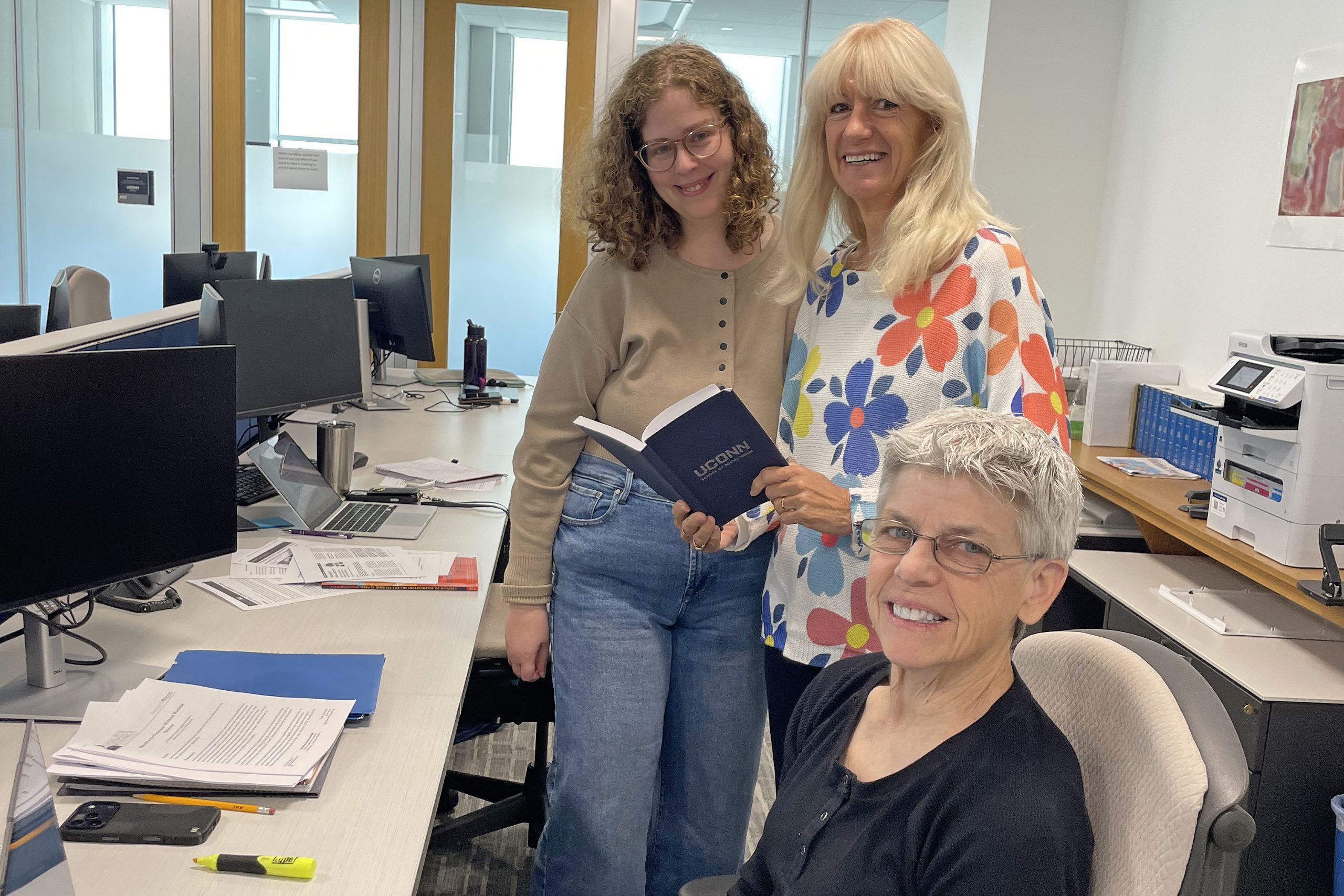
As a licensed clinical child and adolescent psychologist, Sarah Feldstein Ewing Ph.D., is an expert on adolescent substance use, and its neural and behavioral mechanisms of change. At UConn she serves as the Health Net, Inc. Chair in Alcohol and Substance Abuse at its School of Medicine’s Department of Psychiatry. She is a tenured professor and Vice Chair for Research in Psychiatry and director of the Adolescent Neuroscience Collaborative for Health Resilience (ANCHoR).
“Congratulations to Dr. Sarah Feldstein Ewing upon her acceptance into the American College of Neuropsychopharmacology, a distinct honor and recognition of her many contributions to the field,” applauds chair of the Department of Psychiatry at the UConn School of Medicine Dr. David C. Steffens. “ACNP is one of the premier professional societies dedicated to advancing the scientific understanding of and facilitating communication about disorders of the brain and behavior.”
The ACNP, founded in 1961, is a professional, international organization of leading brain scientists. Annual membership in the ACNP is very selective and by nomination only by other ACNP members.
The principal functions of the College are research and education. Selected primarily on the basis of their original research contributions, the membership of the College is drawn from scientists in diverse subfields of neuroscience, including behavioral pharmacology, clinical psychopharmacology, epidemiology, genetics, molecular biology, neurochemistry, neuroendocrinology, neuroimaging, neuroimmunology, neurophysiology, neurology, psychiatry, and psychology.
Feldstein Ewing’s research has long been interested in the intrinsic strengths of adolescents during this unique developmental period and how those strengths can be harnessed to improve adolescent addiction treatment. She is using novel avenues of brain imaging to evaluate how adolescents respond to different elements of behavioral treatment, the most commonly used form of treatment in this age group. Ultimately, she aims to use translational data from the developing brain to help inform and guide treatment outcomes for young people engaged in substance use. Her findings to date suggest that, when they are receiving behavioral treatments, adolescents’ brains respond in totally different ways than adults. She proposes that, in fact adolescents’ brains and behavior are so different that it merits the creation and development of totally new definitions of what is clinically significant substance use behavior in this age group, along with clinical metrics, and avenues to more impactfully treat teen substance use. Her research is looking to evaluate unique, out-of-the-box behavioral interventions, such as the one she has created from her adolescent brain findings called “ADAPT: Adolescent Developmentally Appropriate health Promotion Therapy,” which maximizes the gifts of the adolescent brain to reduce risk and enrich resilience. Using her MRI approaches, she is also using hyperscanning, tandem use of MRI to explore the efficacy of widely used interventions, such as motivational interviewing.
“I could not be more honored to join the American College of Neuropsychopharmacology,” shares Feldstein Ewing of UConn. “I am thrilled to be a collaborating member of such a prestigious and honorable College.”