Dear Colleagues,
I hope everyone had a wonderful week. Spring means beautiful weather, but it also means we are approaching the end of this legislative session, which will conclude on May 6. Just as a reminder, in odd‑numbered years (e.g., 2025, 2027) the legislature has “long sessions,” which span from January to early June. These long sessions include debating and passing of the biennial state budget. However for even-numbered years (e.g., 2026, 2028) like this year, the legislature holds “short sessions,” which begin February and end early May. During this session there is no new two-year budget but there will likely be plenty of policy and budget-adjustment bills.
Over the last few weeks President Radenka Maric and I, along with Jeff Geoghegan (UConn Health CFO), Reka Wrynn (UConn interim VP of Finance), Joann Lombardo (UConn senior director of government relations), Marie Schweitzer (UConn Health director of government relations) and Gail Garber (UConn director of government relations) and others have met with multiple legislators in person both at the Capitol and virtually. Actually, this week Marie Schweitzer gave a legislative update at my senior team meeting and I was surprised to see that we have made 52 in-person and virtual meetings, with 10 more to go. You’re probably wondering what we request of legislators during these meetings. For UConn Health, it is a straightforward request: funding for the negotiated collective bargaining wage increases.
Specifically for UConn Health we anticipate the negotiated collective bargaining wage increases will total across two years (FY 2026 and FY 2027) an incremental $55.7 million that is not currently funded in our budget. Just to be clear, we believe our hard-working employees deserve raises. We are simply requesting that, like other agencies, we should receive funding for such increases.

Our main point to legislators is that we have already covered an over $50 million reduction in state funding this year (remember the $46.7 million Project Thrive). As good stewards and because of our pledge to eliminate state support for the clinical enterprise we have embraced that difficult challenge. However an additional $55.7 million was not included in our budget projections.
I want to pause here and thank our Government Relations team for their amazing work with the legislature. It is because of the relationships that Joann, Marie and Gail have cultivated over many years that President Maric and I are able to effectively advocate for the University and UConn Health.
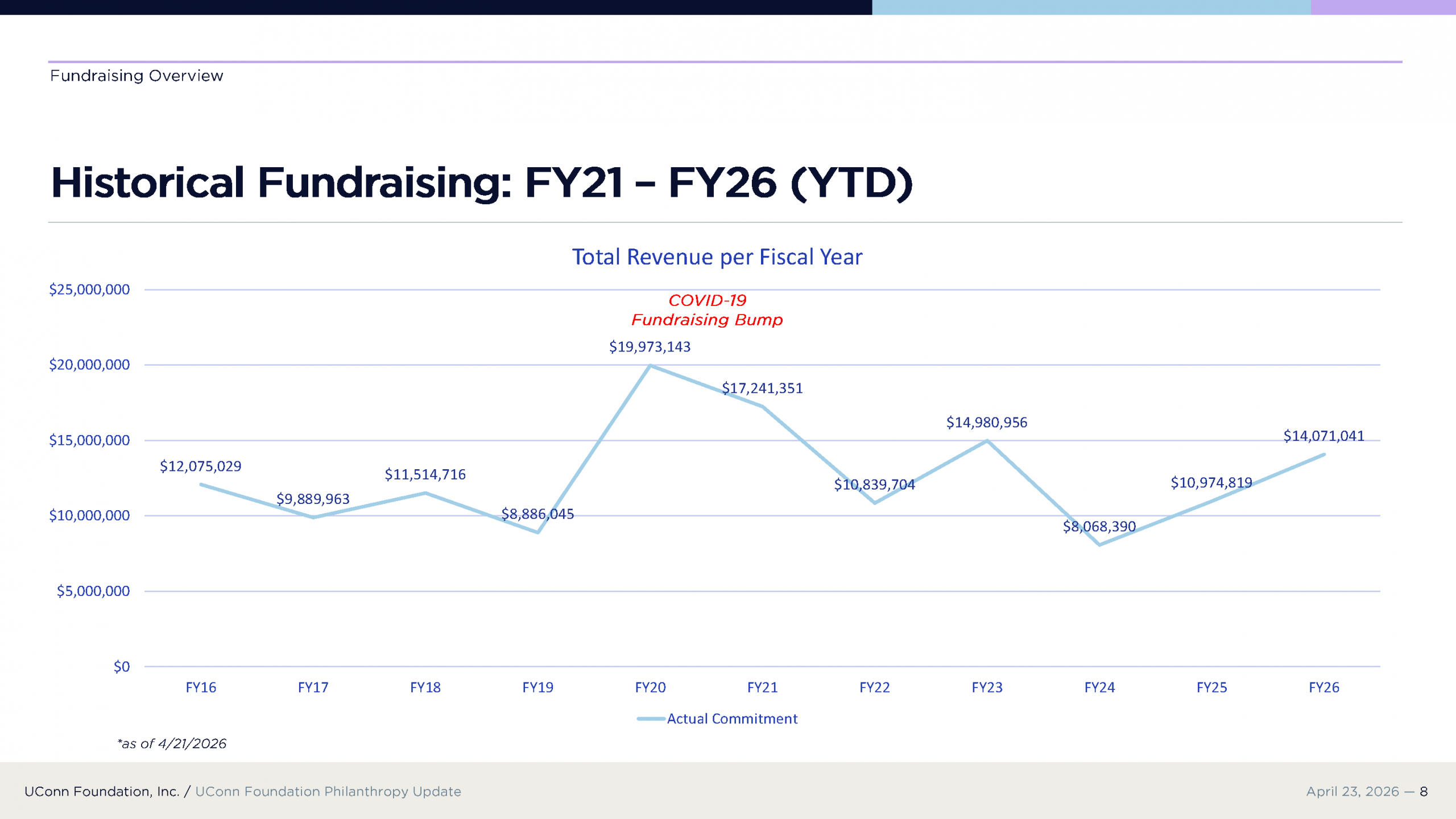
Still on the topic of funding, we and the UConn Foundation have been working on an ambitious plan to raise $50 million a year in philanthropy for UConn Health by 2030. The trajectory starts with a goal to raise $19 million this year, which is considerably more than the $10 million we raised last year and the $8 million we raised the year before. Daniel Sullivan, senior associate VP for development presented an update this week and so far we are on track to reach the $19 million. My sincere thanks to Daniel, who this week celebrated his first six months at UConn/UConn Health. I can honestly say he and his UConn Health fundraising team including Sarah Pandoursky, Kim Barkhamer, Jennifer Hoyord, Liz Krueger, Kendall Guarneri, Marissa Bedini, Samantha Armstrong, Kristina Bennett, Pinar Ozyigit, and Sue Eselby as well as UConn Foundation President & CEO Amy Yancey and the rest of the UConn Foundation are revolutionizing how we raise funds at UConn Health.
And related to philanthropy, I’d like to thank all of you who participated in UConn Gives 2026 and for showing what’s possible when the Husky community comes together. Your generosity helped turn two days of excitement into real, meaningful impact for UConn Gives. We’ll be sharing our official results soon and can’t wait to celebrate the full impact together, but in the meantime, we are deeply grateful for your support and belief in UConn. Thank you for showing up, giving back, and being an essential part of the Husky family.
Now for an update on our negotiations with Cigna. We have been working in good faith to reach a new agreement that appropriately reflects the cost of delivering high-quality care to our patients and community. As of this writing, we have not been able to come to an agreement on a fair and sustainable contract.
Without an agreement we will be out of network with Cigna effective May 1. That would include both our hospital and outpatient clinics, although behavioral health services will still be covered through Evernorth for Cigna members.
Our priority of course remains ensuring patients have access to the care they need, and we are actively communicating with patients about their options, including continuity of care where applicable. In the meantime, we remain engaged in discussions and will continue to negotiate in good faith toward a sustainable, long-term agreement.
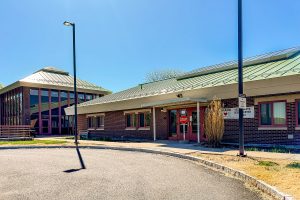
As I mentioned last week, as of April 15, Solnit hospital is now part of JDH and it was heartwarming to see that they now participate in our morning safety huddle (in case your not familiar with safety huddles, this is a core practice in high-reliability hospitals and consists of a 30 minute structured daily meeting focused on patient safety risks and operational awareness). Going forward, our meetings with the Department of Children and Families (DCF), Solnit, and the Office of Policy and Management (OPM) are evolving from ensuring a seamless transition of the bed licenses to understanding how we can together enhance care.
I’d like to share a letter — actually two letters — from a woman describing the compassionate care her sister-in-law experienced on our oncology floor. The first is to Caryl Ryan, our CNO and hospital COO; the second is to staff nurse Gabby Ray (edited for length and privacy):
Dear VP Ryan,
I’m grateful for your obvious and fabulous criteria for hiring the very best nursing care/particularly on your 6th floor Oncology floor. Gabby and her fellow nurses were the absolute best and gave my sister-in-law the dignity she so deserved. The nursing assistants were fabulous as well; my husband and I wanted to share this with you so that they all could be rightfully acknowledged.
Dearest Gabby,
You are an extraordinary nurse, and we are beyond grateful that you just happened to be working when our loved one needed you the most.
You brought much comfort to someone who was very scared and because we lived far away- very much alone! She lost the best friend she had when our daughter and her niece passed in 2024.
We love you, Gabby, and will never forget the stellar treatment and deep kindness you gave to my sister-in-law and to her brother and I at the end of her life!!
As I mentioned in my last update, this week is Healthcare Volunteer Week. As we take a moment to acknowledge the 48 volunteers who are so generous with their time and are instrumental in helping us enhance our patient experience, it’s also a good time for an update on our volunteer program. As you may be aware, we have paused our onboarding of new volunteers while we work on revising our program and implementing new software to help us manage it. By September we’ll be ready to take on new volunteers again, and that becomes a great opportunity – I’d like to invite departments throughout our organization to consider hosting a volunteer starting late summer/early fall. Those with interest or questions, please email volunteerservices@uchc.edu.
Separately, our Office of Patient Experience seeks departments interested in sponsoring high school-aged volunteers for this summer, starting June 22; please see Lifeline for more details on that.
It’s also Medical Laboratory Professionals Week and Neurodiagnostic Week.
Our laboratory at UConn Health consists of many different laboratory professionals including medical technologists, histotechnologists, cytotechnologists, phlebotomists, laboratory assistants, medical laboratory techcnicians, clinical coordinators, laboratory supervisors, clinic office assistants, lead pathologist assistants, pathologist assistants, and associate directors, as well as our pathologists and Ph.D.s, — 159 employees in all. They cover all outpatient phlebotomy services, inpatient phlebotomy services, laboratory testing for inpatient, outpatient, cancer center and the anti-coagulation clinic. Many of the tests performed are tested 24/7 and our lab staff supports many departments throughout the health system, including covering point-of-care testing throughout the organization. Laboratory professionals safeguard health and this week celebrates the valuable role laboratory professionals play in clinical care, public health, and emergency response systems to protect the health of our community. Please join me in recognizing our outstanding lab staff.
For those who may not know what neurodiagnostic technologists do, they are an essential part of patient care, usually working behind the scenes and offering diagnostic and monitoring services. In addition to performing both inpatient and outpatient electroencephalograms (EEGs), EEG monitoring in the NICU, electromyography (EMG) studies, visual evoked potentials (VEP) and ultrasound procedures, they provide on-call coverage, including weekends, to ensure continuous care for patients who need urgent neurological evaluation. Please join me in acknowledging the contributions of our six neurodiagnostic technologists
Next week we are celebrating Patient Experience Week, April 27 to May 1, by recognizing the many team members across our organization who work together every day to create a positive experience for our patients and their families. From our nurses and physicians to clinical and support staff, each member of our team plays an essential role in delivering compassionate, high-quality care. Patient Experience Week is an opportunity for healthcare organizations nationwide to highlight the importance of patient-centered care and to celebrate the collaboration that makes exceptional care possible. We hope you will join us in celebrating Patient Experience Week and take part in the activities planned throughout the week. To view the full schedule, please visit the Patient Experience page located on The Hub.
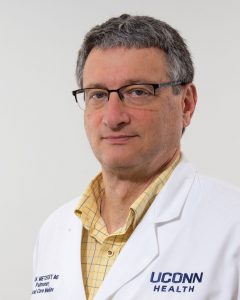
Last week I had the honor of being part of a retirement celebration for Dr. Mark Metersky. Dr. Metersky has had an extraordinary 30-plus-year career here at UConn Health, most recently as chief of service for the Department of Medicine. He is an internationally renowned expert in pulmonary disease, especially bronchiectasis; he is the founder of our Center for Bronchiectasis Care, which opened in 2007. His research has advanced medications and defined standards of care, and over his time here he has trained countless physicians.
The retirement celebration took place in the academic rotunda, and thanks to our IT – Unified Communication Team, you can watch a video of the ceremony.
Please join me in congratulating Mark on his retirement. While we will miss him immensely, we wish him happiness and good health.
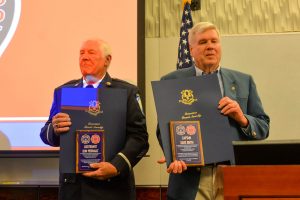
Finally, also last week our fire department held a ceremony commemorating 50 years since UConn Health became the birthplace of paramedics in New England. In case you were unaware, in 1975, the first training class in paramedicine took place here, attended by four UConn Health firefighters and eight East Hartford firefighters. Paramedics was a new concept at that time; it only existed in a few cities in the country, the closest to us was Pittsburgh.
Greg Metcalf, who was our public safety director in 1975, is largely credited with being the driving force behind bringing this new discipline to the region by bringing it to UConn Health and training our firefighters as paramedics. Two of the four UConn Health firefighters who were in that first class of paramedics, Dave Smith and Don Perrault, returned for the ceremony, and so did Greg, who flew in from Utah for it. I invite you to read more about them on UConn Today.
Our place in the history of paramedicine is a point of pride for the University and really the state.
I am thankful for those with the foresight and fortitude to make us a leader in this great advancement in emergency medicine.
And I am thankful to everyone reading this for all the work you do.

Andrew C. Agwunobi, MD, MBA
Chief Executive Officer
EVP for Health Affairs
UConn Health
Dear Dr. Andy
As spring kicks in so do the mosquitoes. They are swarming all around campus. Is there a plan in place to address this?
Thank you for your question, which I’ve shared with our leaders in facilities. We do have pest management protocols that focus on identifying and eliminating the source of pest activity rather than broadly applying pesticides. As J.J. Odom, our building and grounds director, explains, mosquitoes typically are drawn to standing water, such as ponds, and we do have a large pond on the lower campus that may contribute. They are also more active following rainstorms or during periods of high humidity, which can make control efforts more challenging.
If you become aware of a specific location where this is a particular problem and report it by completing a work order, we can have our pest control vendor take a closer look and address it.
Thank you for raising this.
The geese are nice to have on campus, however, the mess they leave behind is very unsanitary. The walkways are bombarded with their feces and it becomes a safety issue as well, for those who walk around campus. Is there a way that maintenance can spray the walkways every morning?
I understand the frustration. J.J. Odom, our buildings and grounds director, has his crew monitor and sweep the walkways daily. While we do pressure wash the walkways periodically over the summer to manage buildup, the reality is, because of the volume of patient and visitor traffic, it’s not feasible to pressure wash every day.
J.J. also reminds us that Canada geese are a protected species, and we are limited with what we can do to control or restrict their presence on our campus, so we appreciate the measures our grounds crew is able to take to address these concerns.
Thank you for the question.
Have something you want to ask Dr. Andy? Submit your question on The Hub.
Hub Highlights


We had a week of National Infertility Week coverage on Channel 3, featuring our experts.
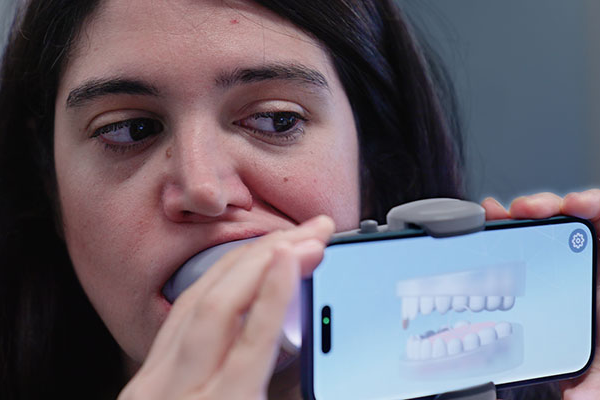
Our newest UConn Health Minute on CPTV features AI in orthodontics with Dr. Niloufar Azami.
We celebrate 50 years of paramedics — learn the significance of this to our fire department.
Our Earth Day report includes a new high for our medical school on the annual Planetary Health Report Card.
Visit the Hub Now
Note: Unlinked content is only available on The Hub, for which you must be on the UConn Health network to access.
Public Health Sciences Chair Doug Brugge discusses the silent success of public health with Dr. Anthony Alessi on the latest “Healthy Rounds” podcast.
Meet our dental student commencement speaker.
Patients share their success stories for National Prosthodontics Week.
Plus, learn about “The Sticker Sensation” in our University Tower lobby!