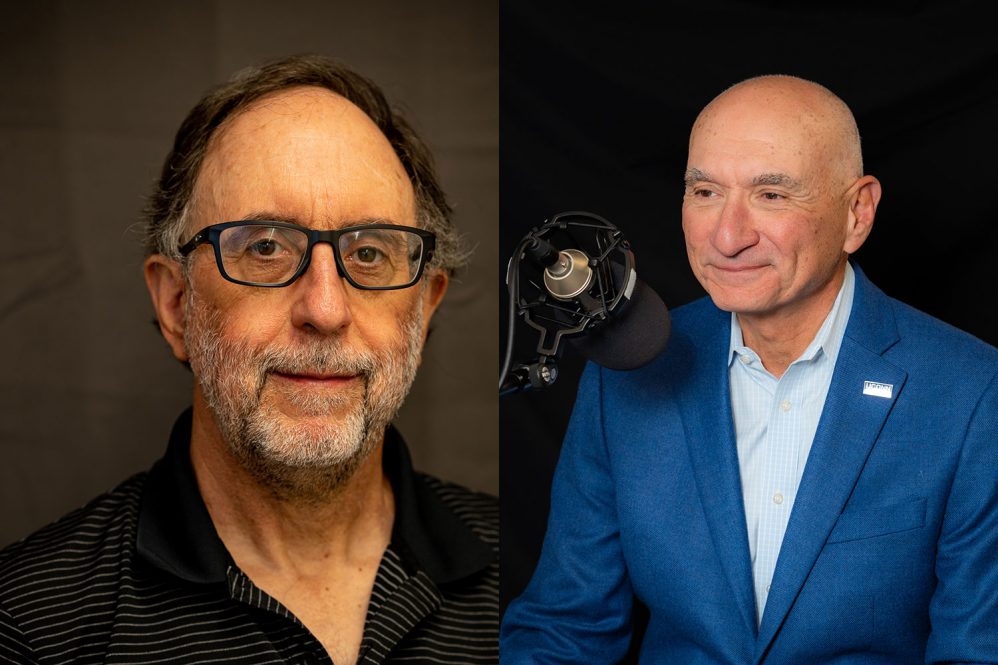
It’s impossible to definitively measure how many lives were saved or prolonged, or how much illness or disease prevented or made less severe, as a direct result of public health initiatives. Douglas Brugge, chair of the UConn School of Medicine’s Department of Public Health Sciences, joins Dr. Anthony Alessi to explain the “invisible” benefits of things like policies that regulate toxins in our water or pollution in our air, and discuss how COVID changed the perception of public health (and lessons learned from that).
If you don’t get cancer or don’t have a heart attack because someone… regulated toxins in the drinking water, or in my field, the pollution in the air, it’s invisible. You just don’t know that it happens. — Douglas Brugge
Listen now:
Find the transcript on Podbean.
Submit questions for “Healthy Rounds” to healthyrounds@uchc.edu.
Support comes from UConn Health Orthopedics and Sports Medicine and Coverys.