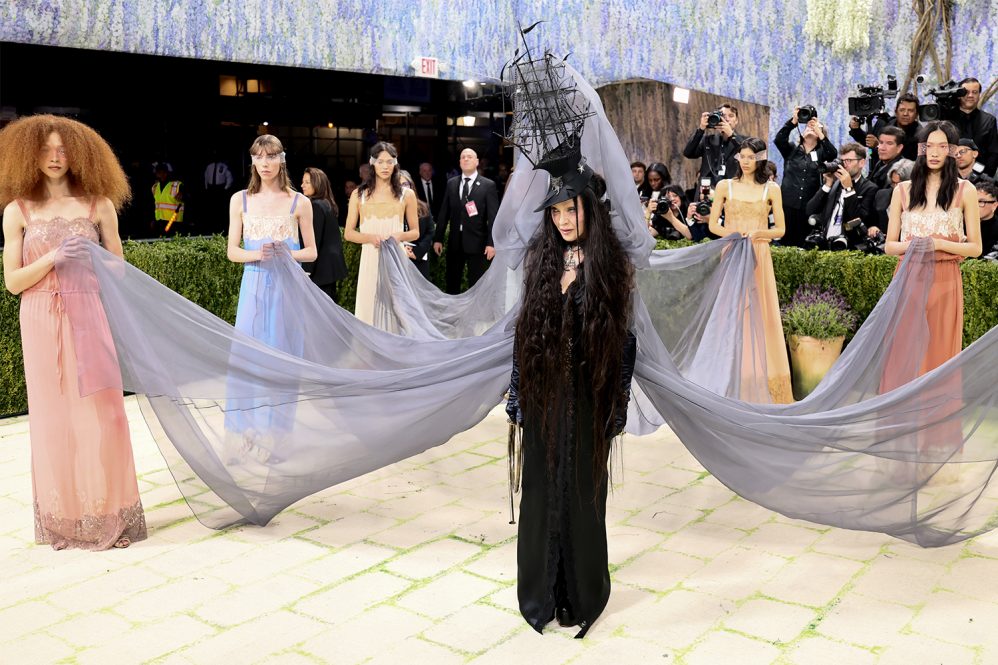
Of course Sarita Fellows scans Hollywood red carpets for inspiration, but says she mostly watches the fashion parade at events like the Met Gala because they’re so different from her daily work as a costume designer.
One might assume the magnificent expressions of high style on display May 4 during the 2026 Gala, which opened the museum’s exhibition “Costume Art” in its new Condé M. Nast Galleries, bore similarities to the costumes she designs for theatrical productions.
But “the Met Gala is much more akin to art than costume design,” says Fellows, an assistant professor in UConn’s dramatic arts department who also is a New York City-based designer. “There is no script for the Met Gala. They give you a theme, and you determine what your interpretation is of that theme. Whereas, a costume designer tells a story from beginning to end, with an arc somewhere in the middle.”
Telling That Story
A costume designer’s work often starts months, if not a year, before a production ever goes on stage or in front of a camera, Fellows says, long before the actors playing leading and supporting roles are brought into the process.
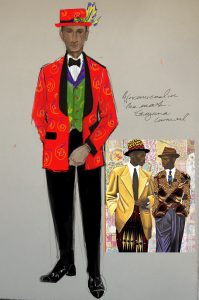
Fellows says that once she has the written word or movement in hand, much like a student, she too hits the books, researching all she can about the world in which the production takes place: What’s the time period? Is the setting invented? How does a character move?
“I’m working with the lighting designer, a set designer, sometimes a projection designer, props, the director, a lot of times the choreographer, intimacy directors, fight coaches, and that’s even before I get to meet the person who’s actually inhabiting the clothes,” she says.
Lately, she’s been working on technical drawings for a show set in an imagined world, creating from scratch invented insignias on uniforms that resemble something real, but aren’t actual. Those symbols, she notes, need to be recognizable enough that an audience can infer their meaning without having studied the invented dictionary from which they came.
Designing costumes for a traditional production of something like “A Christmas Carol” is easier than for an invented world like that of “The Handmaid’s Tale,” she says, because the rules for a traditional Christmas production are laid out by history: People wore petticoats and corsets, and someone like Scrooge dressed in black.
“In ‘A Handmaid’s Tale,’ there’s so much inventive work to develop the universe and determine what those rules are,” she says. “What is the structure of the society? Why is it built this way? Who would make the clothes? Where would the fabric come from? The costume designer for that show is learning every single thing about the world that is not about clothing to figure out what the characters are wearing.”
Fellows says a costume designer also must think practically and consider the things a character does in a production.
Costuming for a two-character show with no wardrobe changes might be straightforward and take only two weeks – unless, of course, during the show “those two actors have wings that need to explode out of their bodies, and they get lifted into the air and fly across the audience. That would suddenly jump to a three-month process because of all the rigging you have to figure out,” she says.
Costumes Are All Around
Fellows acknowledges that while someone like Lady Gaga wore her famous meat dress in 2010 to make a point, the fashion worn by such artists on the concert stage is more similar to the costume design work she does than the artistic expressions one saw on the Met Gala’s red carpet, where the dress code this year was “Fashion is Art.”
During Bad Bunny’s Super Bowl halftime show, for instance, the audience saw a full story conveyed much like in a play, she says: “All of those costumes were so hyper-specific and beautifully crafted. There wasn’t a single thing on a performer that didn’t have meaning and purpose behind it. It was tied to a story, the performer saying this about our humanity.”
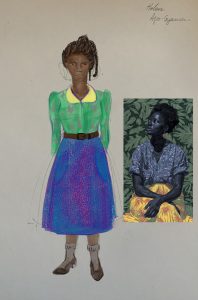
The clothing everyday people choose to wear in their everyday lives also is closer to Fellows’ designs than the Met’s red-carpet showstoppers, she says – even when her sketches include a grandiose bejeweled opera headpiece.
“If you were to write a character of yourself, what would you be wearing? I would be thrilled to see someone in a T-shirt and jeans or leggings walk down the red carpet at the Met Gala, because that everyday outfit is a costume. That can hold as much value and glory as something in beaded gold,” she says.
Think about what you might wear for a meeting with the boss or to make a big presentation, Fellows says. Those are costumes one dresses themselves in to feel or present themselves in a certain way, and ultimately, they tell the world a story about you.
The same can be said for a couple on their wedding day – from what the bride wears beforehand to what she wears down the aisle, from a buttoned-up collared shirt on the groom to the number of buttons undone by nightfall. It’s a production that tells the story of that couple.
“Anything in life that is ceremonial in that way, quinceañeras, sweet 16s, prom, any of those moments can be costumed,” Fellows says. “The world is full of costumes. It doesn’t need to be a ceremonial gown. It could be the jean jacket that you chose to armor yourself in.”
She continues, “I invite the layperson to consider that costuming doesn’t have to be glam and to try it in the small moments, like going out on a date. Put on a costume and see what happens.”