When Kim Price-Glynn was a new mother, she found herself in a not-so-unique situation.
“I had a lot of people who could care about my kids, but I had no one locally who could care for my kids,” she says. “My extended family is far-flung, so my husband and I had to create our own network of care from scratch.”
She joined La Leche League and the local MOMS Club chapter. Later came membership in a babysitting co-op and the school PTO. Each group allowed her to forge friendships, gain access to resources, and find a place to commiserate and celebrate parenting highs and lows.
But they also offered professional direction.
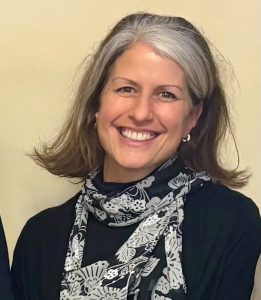
An associate professor in UConn’s sociology department, Price-Glynn studies care work and considered her own experiences when beginning to look at the organizations that parents turn to when they themselves need care.
Take that babysitting co-op, for instance.
It included members recruited by neighbors and from personal networks to create a hand-picked group of mostly moms to trade caring for each other’s children in a pinch or need of a night out. Price-Glynn says it was a “lifeline” for her when the kids were little.
But because it was by invitation only, it was exclusionary by nature, and that exclusivity, through its very structure, she says, inadvertently bolsters the proverbial stereotype of parental cliquishness and, in return, diminishes the importance of the group’s work.
“As a sociologist, I was fascinated by the ways that these groups both provide possibilities to address and transform inequalities and also reproduce and exacerbate them. I learned a lot about caregiving and about the strengths and relative weaknesses of these groups,” she says of the research conducted for her latest book, “Who Cares About Parents? Temporary Alliances, Exclusionary Practices, and the Strategic Possibilities of Parenting Groups.”
“These groups provide a lot of service, and focusing on this kind of mid-level, or organizational level, care infrastructure is important because we tend to focus on families and individual care,” she says. “We think about government and state care. We think about private, expensive paid care, but we don’t always look around at what’s right in front of us in our communities.”
Women Take on Most of the Caregiving
Just before Mother’s Day in May, Price-Glynn says she was reflecting on motherhood in general and drifted in thought to the mountain of research that’s found most of the caregiving responsibility – whether for children or aging parents – falls to women.
They tend to be the ones who make summer camp arrangements, schedule flu shots and physicals, and notice the need for a new pair of sneakers or haircut.
“It’s very gendered,” she says of caregiving. “Women do the bulk of the caregiving, both paid and unpaid, and they are struggling.”
The pandemic a handful of years ago put parents and children in the same space for extended periods, with moms and dads taking on even more concentrated roles of teacher, coach, and playmate, Price-Glynn says, evermore raising the need to talk about things like parental burnout and respite.
“We don’t even call it respite care when we give it to parents, right? We don’t even think about it that way,” she says. “There’s a long list of needs that parents have. They need connections, support, and camaraderie. They need affordable child and eldercare, access to respite care, health benefits, paid family leave, and flexible workplaces.”
Parent organizations like a school PTA might be where one turns to have some of their needs met, if only because a parent group knows how to get things done, she says. Movie nights, back to school cookouts, book fairs, and spring fundraisers just seem to happen and offer events at which parents can connect, meeting some of their need for camaraderie and respite.
Parenting groups also provide outreach, education, in-kind resources, financial support, and advocacy, she notes.
“There are exciting and progressive things happening in these parent groups that you might not expect,” Price-Glynn says. “They are transforming in really interesting ways to expand resources for parents.”
Yet, in some ways they’ve stayed in character.
Men Say They’d be Suspicious of Other Men
With Father’s Day next on the calendar, Price-Glynn says that her recent research also focused on a group of dads who were deeply involved in their children’s care.
First, she asked the fathers in a babysitting co-op – who, even they admitted, participated only by proxy through the efforts of the mothers, their wives – whether they would be OK with another dad in the group caring for their child.
Overwhelmingly, they said that would not be copasetic.
“They didn’t see men as reliable caregivers,” she says. “They were really suspicious of men who wanted to provide care.”
That was discouraging, but since those surveyed belonged to the parent group only through a partner and not on their own initiative, she wondered how the response might be different from a parent group geared specifically to dads.
Price-Glynn next talked with members of City Dads Groups on the East and West coasts and in the Midwest and asked the same question: Would they approve of someone in their dad’s group watching their kids?
“It’s important to set up the question. I wasn’t asking them about whether they’d be OK pulling a man off the street and having him watch their kids,” she says. “I was asking them about people they know, people they socialize with.
“And I got the same halting hesitation from those men. It was really troubling to me,” she continues. “We have such deeply ingrained, gendered ideas about caregiving, and bringing men into care is going to be a challenge.”
The men she interviewed said they’d be skeptical of any man who was interested in caregiving and saw them as potentially harmful to children, she says, emphasizing that was the prevailing view from a group of men positioned to think otherwise.
They even paused when asked whether they’d hire a boy as a babysitter.
“There’s a lot we need to do to change that,” she says. “We need to raise boys to consider caregiving as part and parcel of what they do and who they are, and we need to figure out a way to bring that through their life course. Certainly, there needs to be policy change, but also day-to-day we need to make caregiving more accessible to men and change how we understand masculinity and care work.”
After all, she notes, everyone at some point needs care.
“Caregiving is just the cornerstone of a good and just society,” she says. “There’s no higher calling than trying to build a society in which caregiving is recognized, supported, and understood because so much good flows from there. It reverberates, and our basic humanity depends on it.”
Only then would there be more than enough people to care for – and not just about – each other.