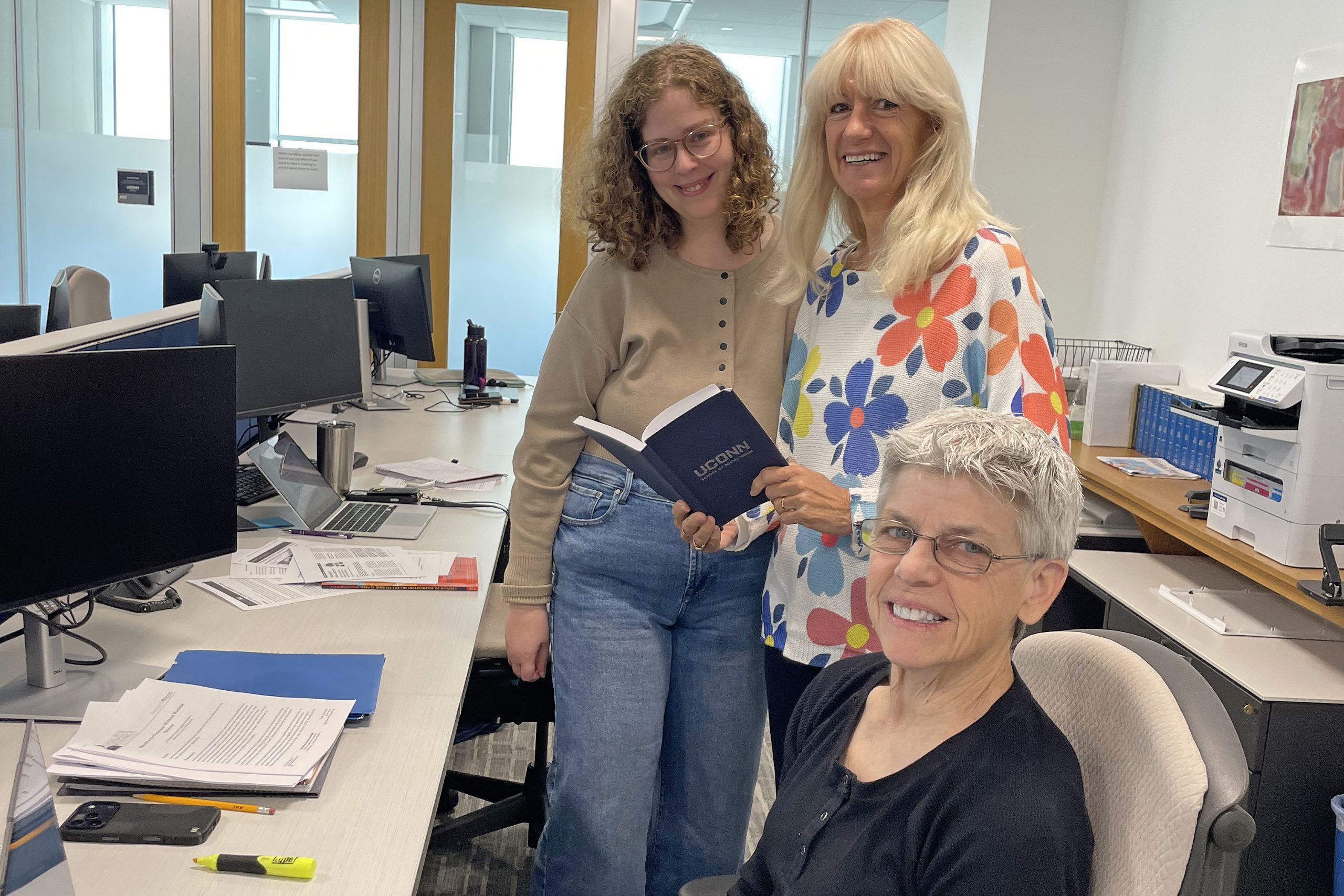
On a warm spring morning at York Correctional Institution in Niantic – Connecticut’s only state prison for women – a group of UConn landscape architecture students stepped into an environment unlike any they had studied before.
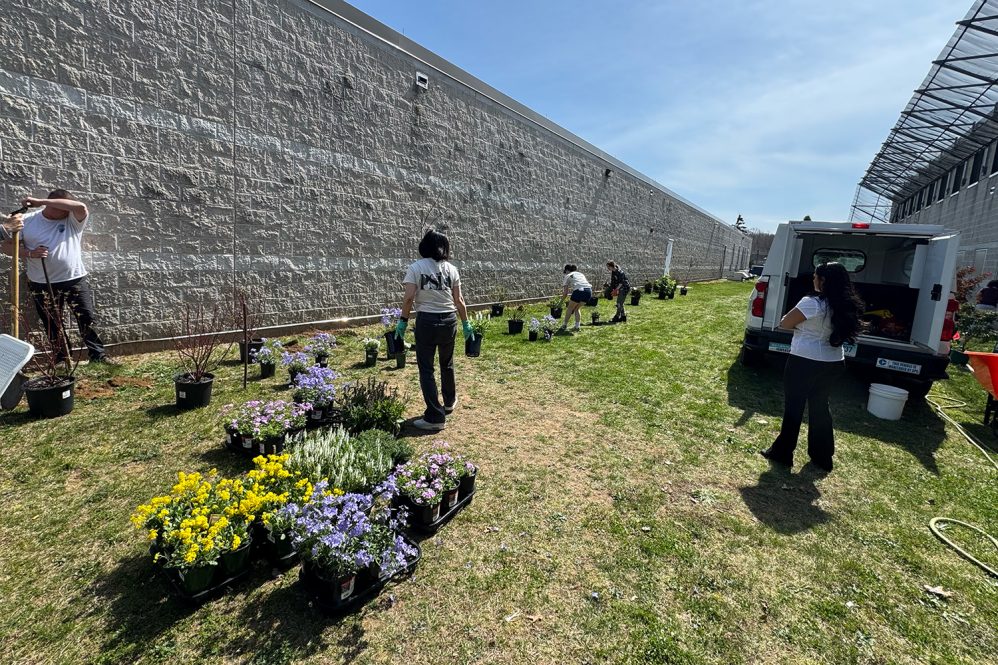
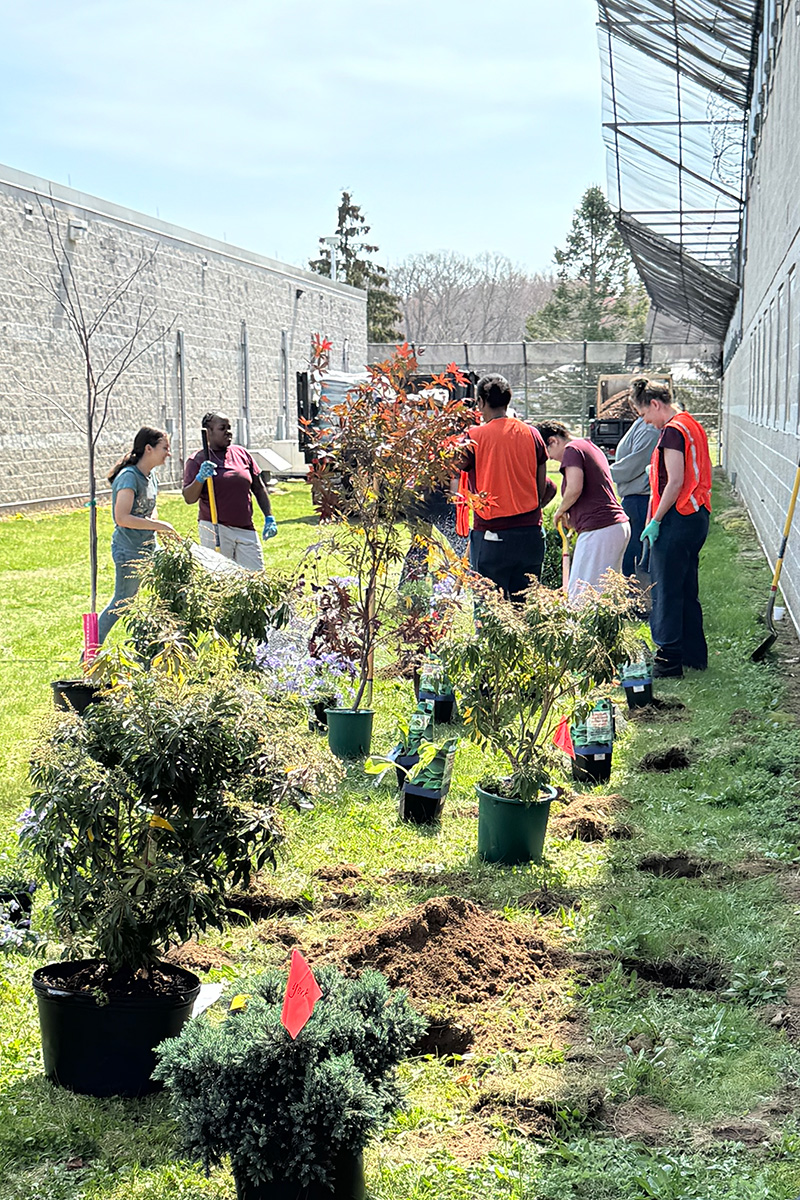
Carrying shovels instead of pencils, students joined correctional officers, incarcerated women, faculty members, and volunteers to transform portions of the facility with native trees, shrubs, and flowering perennials. The work capped months of planning and collaboration, but it also marked the start of a different kind of learning experience — one that challenged students to rethink how design shapes the places people live and work.
The project was part of a broader partnership between UConn’s Institute for Municipal and Regional Policy (IMRP), the Department of Plant Science and Landscape Architecture, and the Connecticut Department of Correction. Together, the organizations are exploring how thoughtful design can help create healthier correctional environments while giving students real-world experience in a challenging setting.
“You could tell some of [the students] were a little nervous at first, which is understandable,” says Officer Steve Smith, an 18-year veteran with the Connecticut Department of Correction. “They saw firsthand what life inside a correctional facility is like and understand the work that happens here every day. Experiences like that can’t be replicated in a classroom.”
For landscape architecture student Eveleen Jiang ’26 (CAHNR), the project represented a rare opportunity to take a design from concept to implementation.
“Most of our projects are hypothetical,” says Jiang. “We try to design for the client in the most ideal setting. Once you’re actually in the prison, there’s a lot of regulation on what you can and can’t plant.”
Rethinking Correctional Spaces
The initiative grew from IMRP’s broader work on prison culture change and normalization. The concept focuses on creating environments that support health, dignity, and well-being for everyone who spends time in a correctional facility, including incarcerated residents, correctional officers, staff, and visitors.
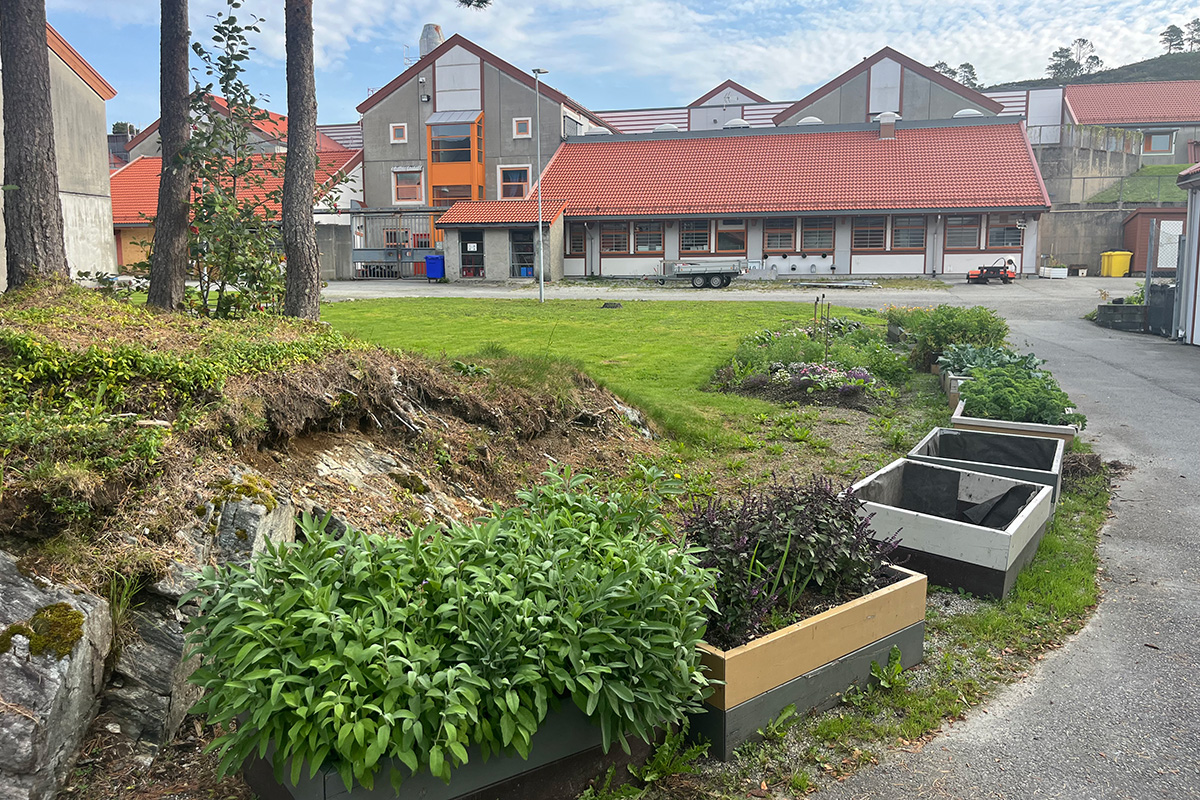
Andrew Clark, director of IMRP, which is housed in the School of Public Policy(opens in new tab) in the College of Liberal Arts and Sciences, took a first immersion trip to Norway in 2022, when a Connecticut delegation visited correctional facilities, a halfway house and a nonprofit youth service provider.
“We became aware of the vast difference in correctional practices and spaces within Norway,” says Clark.
The contrast was striking.
“Norwegian correctional facilities have plantings, flowers, and gardens,” says Clark. “In some facilities, the residents there care for the plants and even grow their own crops.”
Clark, who had worked as a landscaper during college and in his 20s, saw those ideas as proof that physical spaces can affect how people experience an environment.
“Many of the facilities that Connecticut has are old and outdated and reflect a time when punishment was a main priority of policymakers for those who were incarcerated,” says Clark. “Going to Norway and seeing beautiful campuses that were based on a desire to foster rehabilitation and wellness made the impact of those facilities tangible.”
“They are still prisons,” Clark continues, “but when you see people in those facilities, the immediate feeling you have is not bleak or depressing. It’s hopeful.”
In 2024, IMRP began a formal partnership with CTDOC and Amend, a prison-culture change initiative out of the University of California, San Francisco, to begin applying those principles in Connecticut. The effort has included activity and resource teams, officer training, and beautification efforts focused on painting, murals, and plantings.
York and Garner Correctional Institution, a men’s mental health facility in Newtown, were the first two Connecticut sites involved. The initiative has expanded to include MacDougall-Walker Correctional Institution in Suffield, the largest correctional facility in the Northeast, and the Maloney Center for Training and Staff Development in Cheshire.
Designing for York
The landscape architecture component for York grew from a collaboration between Clark and Sohyun Park, associate professor of landscape architecture in the College of Agriculture, Health and Natural Resources (CAHNR).
“This is not a typical site,” says Park. “I thought it would be important for us to help with those environments that had not been healthy for both inmates and staff members. There was a lot of potential to increase the beauty of the space and make the spaces more like a human environment for mental health relief.”
Park incorporated what became known as the York Normalization Project into a spring 2025 syllabus for her plant design course. Students began with visits to the facility, observing the spaces firsthand and learning directly from the people who use them.
The site visits came with challenges. Because of security restrictions, students could not bring phones or cameras into the facilities. Instead, they relied on officer photos, sketchbooks, handwritten notes, and observation to document the landscapes.
“They had to rely on their hand muscles just to draw something,” says Park.
Jiang said the site analysis encouraged students to pay closer attention to details they might otherwise have overlooked.
“I’m a pretty visual learner,” she says. “I brought a sketchbook and a pencil, and I sketched a lot of the landscape. For me, it’s just about paying attention when we’re actually there.”
Rather than arriving with predetermined solutions, students were encouraged to understand the needs of the community first. They spoke with correctional officers about how spaces were used, where employees gathered during breaks, and what improvements could make the greatest difference.
“Landscape architecture is not just about creating attractive spaces,” Park says. “It’s about understanding how people experience their environments and designing places that support the way they live, work, and interact.”
Planting, Presenting, and Adapting
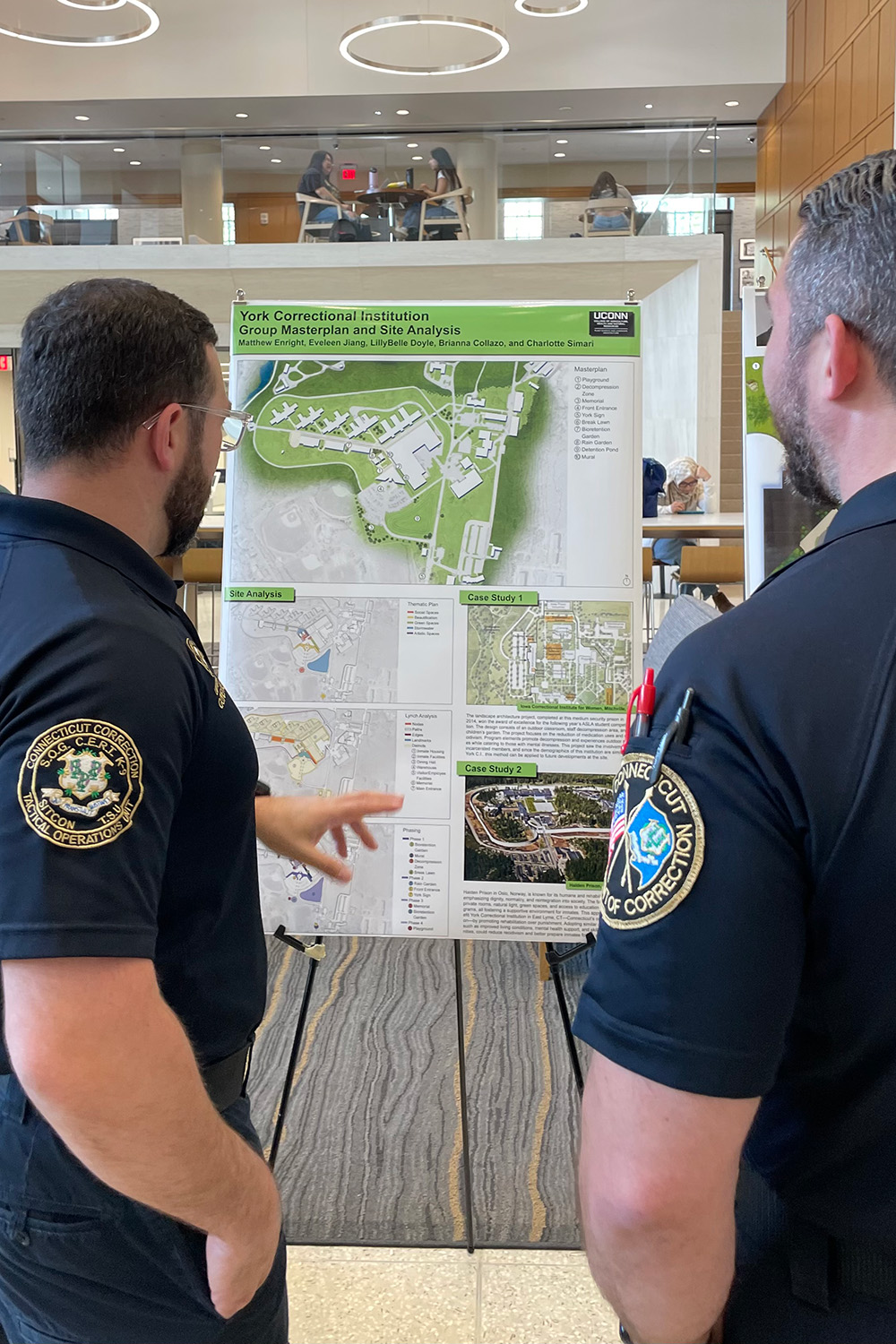
Working in groups, students developed proposals that considered aesthetics, sustainability, maintenance, seasonal interest, and the operational realities of designing within a secure environment.
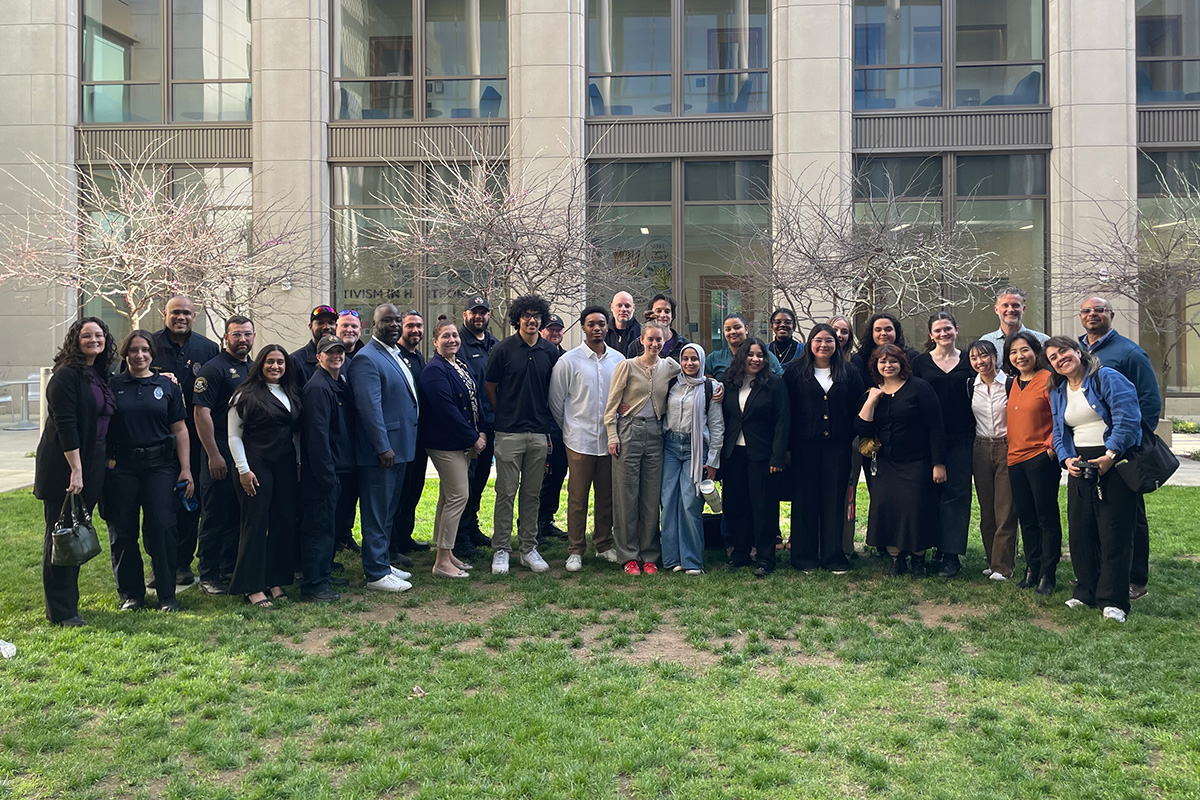
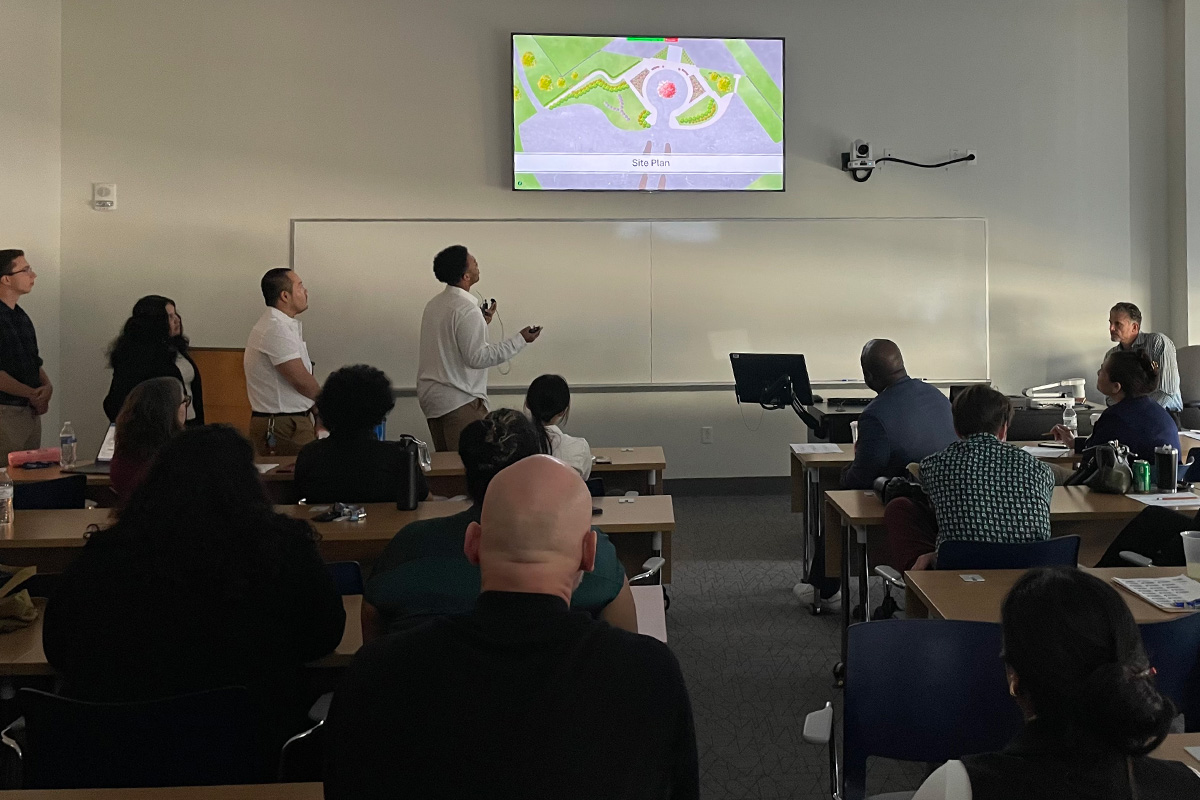
In May 2025, students presented their completed landscape designs at UConn Hartford to faculty, IMRP staff, and more than a dozen representatives from the Connecticut Department of Correction. Officers reviewed the work on large poster boards in the building’s atrium before attending presentations, where each student explained how their ideas would benefit the facility.
One of Jiang’s designs focused on expanding an existing officer memorial area by creating two connected pathways — one for gathering and reflection, and another designed as a quieter, more reflective space. She incorporated Connecticut’s state tree and state flower – the white oak and the mountain laurel – into the planting plan, a detail that resonated with correctional staff.
“The officers were appreciative of the level of care, curiosity, and innovation that students put into those projects,” says Clark.
“Coming from a security perspective, my first instinct was to think about whether some of the ideas could present operational or security concerns,” says Smith. “The students were receptive to that feedback. They listened, adapted their designs, and found solutions that balanced creativity with the realities of working inside a correctional facility.”
“For many of us, it was the first time we had seen an external organization focus on improving our workplace rather than simply studying it,” says Smith. “That meant a lot.”
The presentations were the final course assignment, but unlike many academic projects, these designs were not intended to remain on paper. After months of research, site visits, and design revisions, students had the opportunity to see their work move to the facilities they had studied.
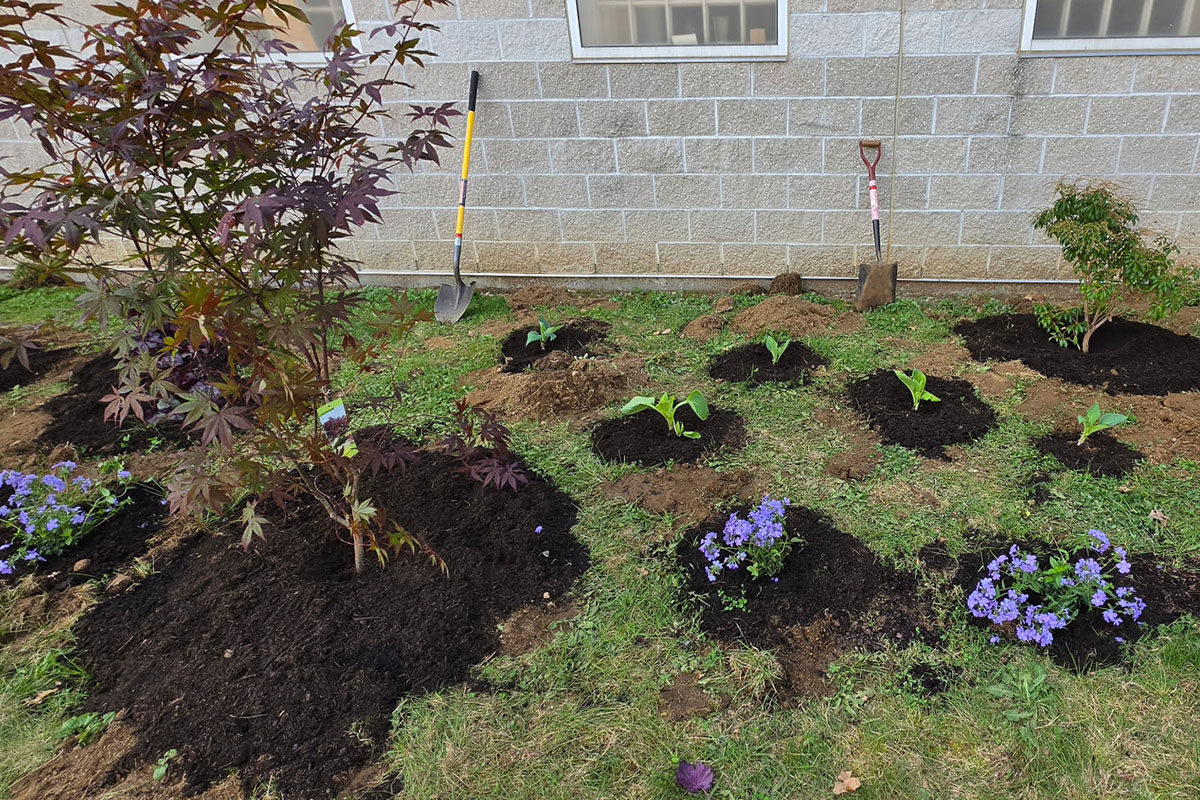
In the fall of 2025, students planted bulbs that wouldn’t emerge until spring outside York. Inside, plants were delivered to spruce up staff areas and shared spaces, including the officers’ roll call room.
Irina Ahmed ’25 MA, a research and policy associate with IMRP, helped coordinate aspects of the project from its early stages. She says the response from correctional officers demonstrated the value of even small changes to the environment.
“The officers were in the doorway when we brought in the first round of plants,” says Ahmed. “They were beautiful plants, such a variety of colors and flowers, and the officers were so appreciative and excited about it.”
The plants also created opportunities for staff members to take ownership of their environment by caring for something living within a space that can often feel institutional.
“I love any opportunity to work with both staff and the incarcerated residents,” says Ahmed. “It emphasizes the work we do, which is to make the facility better for both populations.”
Learning Beyond the Classroom
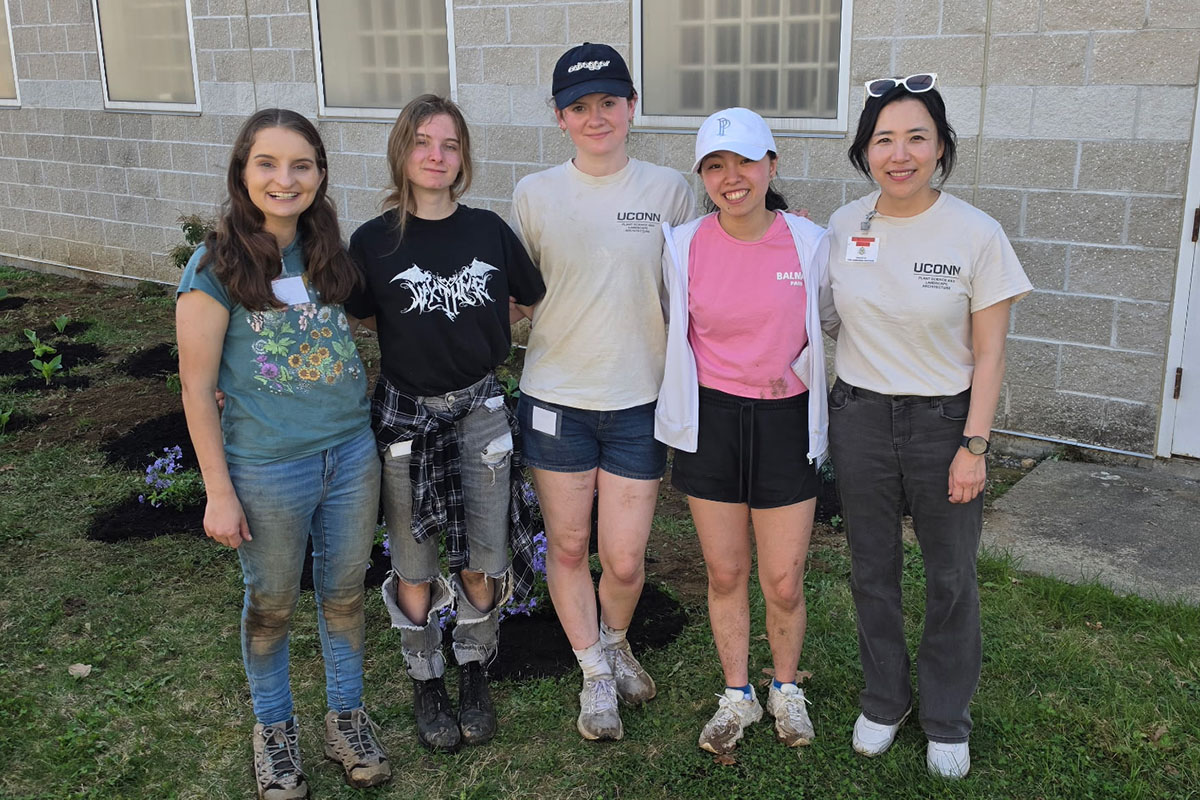
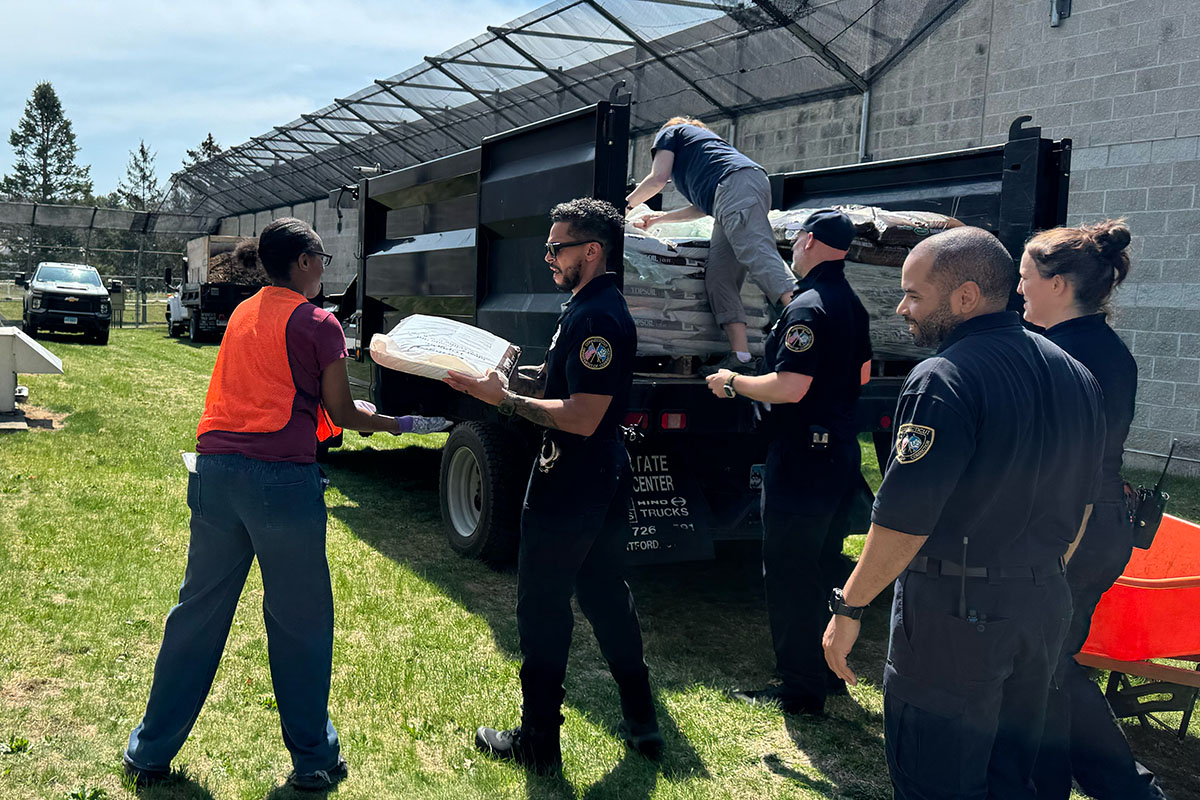
The planting day brought together students, faculty, correctional staff, incarcerated women, and volunteers for a shared effort to transform the outdoor spaces.
But students quickly discovered that real-world projects rarely unfold follow a design plan perfectly. One proposed tree had to be relocated after crews discovered buried concrete beneath the planting site. Another tree selected for an officers’ break area was moved after staff realized its mature height could eventually create visibility concerns.
“You just have to be really, really flexible,” says Jiang.
For Jiang, the experience represented the rare opportunity to follow a project through every stage of development.
“Actually going through the entire process, from site analysis all the way down to planting the tree, was the main thing that drew me to the project,” she says.
For many of the students, the biggest takeaway was the perspective they gained from working directly with the people who live and work inside correctional facilities.
Jiang says her experience at York changed her previous perceptions of prisons, which were largely shaped by popular culture.
“It felt like I was working alongside people that I could be friends with outside the facility,” she says.
Park initially wondered whether students might feel uncomfortable working alongside incarcerated individuals, but those concerns quickly faded.
“They worked together without prejudice or barriers. They were just in that moment,” she says. “Plants have a power.”
The collaboration reflects a growing body of research showing that caring for plants can provide routine, responsibility, and a sense of purpose. These benefits that can be particularly meaningful in environments where individuals have limited control over their daily surroundings.
“Correctional facilities can be very negative, stressful environments,” says Smith. “It’s easy to forget how much our surroundings affect the way we feel. Bringing in color, plants, and more welcoming spaces helps break up that atmosphere.”
Clark believes those improvements represent a broader shift in how communities think about correctional spaces and the impact on both the incarcerated and the staff.
“It’s a hard, harsh environment that we’ve co-created in correctional spaces in the U.S.,” he says. “Ninety-nine percent of people in the state do not experience them on a day-to-day basis, and it’s easy to forget that these are taxpayer-funded facilities that can either assist or hinder health and well-being.”
For Jiang, who graduated in May and will continue her education through a master’s program in landscape architecture at the University of Pennsylvania’s Weitzman School of Design, the project reinforced the type of work she hopes to pursue.
“I really enjoy projects where I can talk firsthand with the people I’m going to be helping,” she says. “It’s a community that you don’t always get the chance to help.”
For Clark, the project represents one small but meaningful step in the institute’s ongoing work in correctional environments.
“It’s a tall task to be asked to be on the leading edge of change and culture,” he says. “Every little bit helps.”