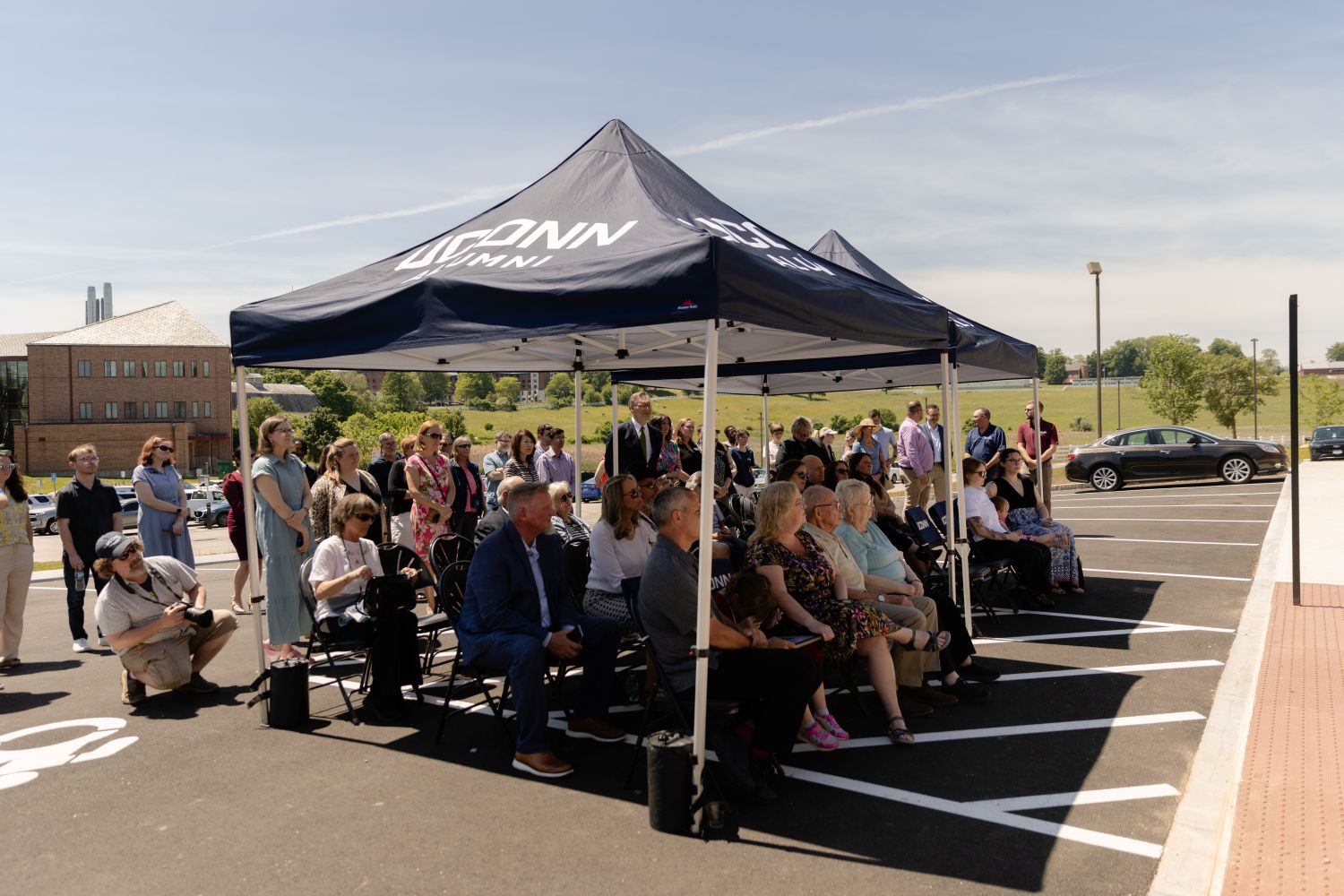
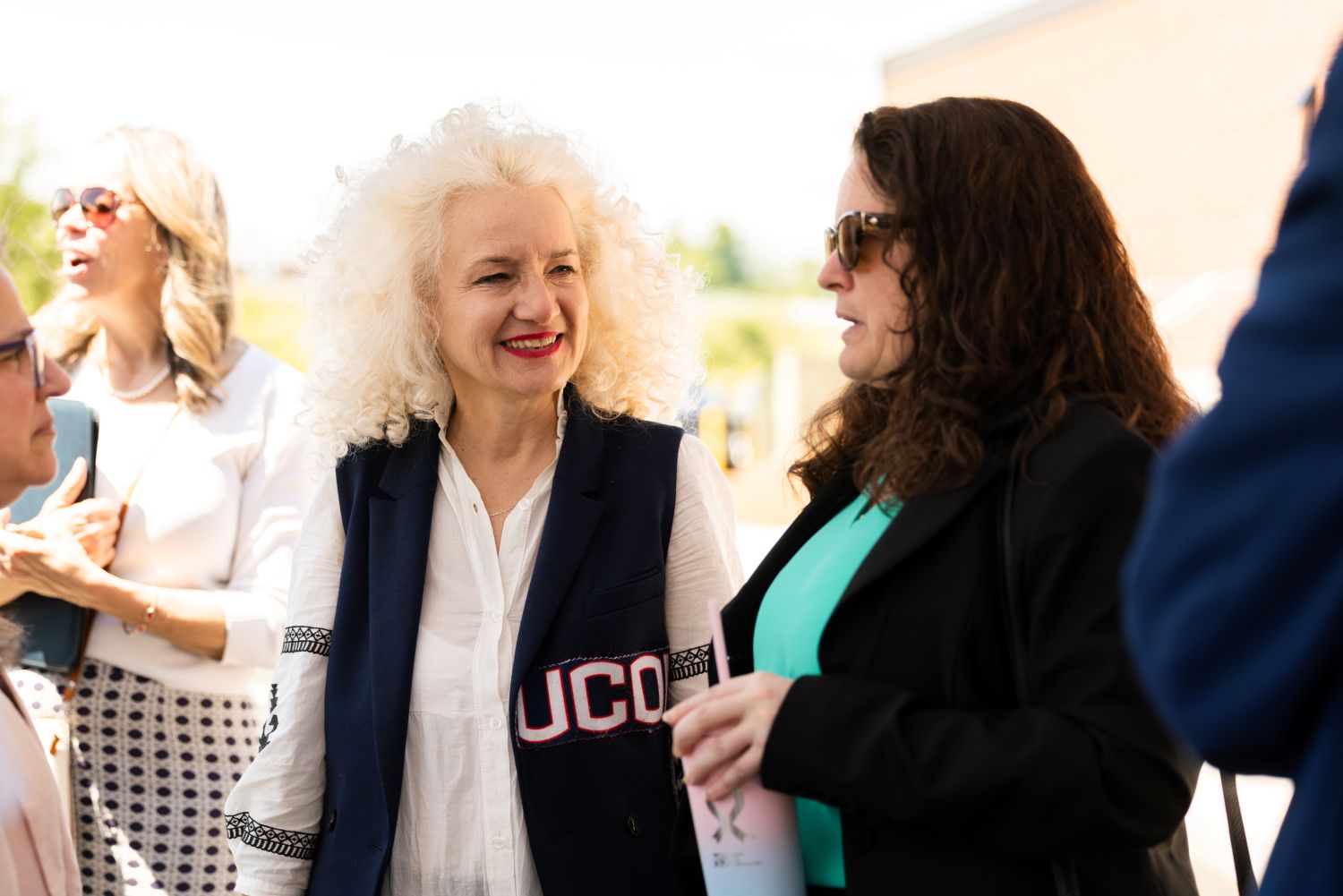
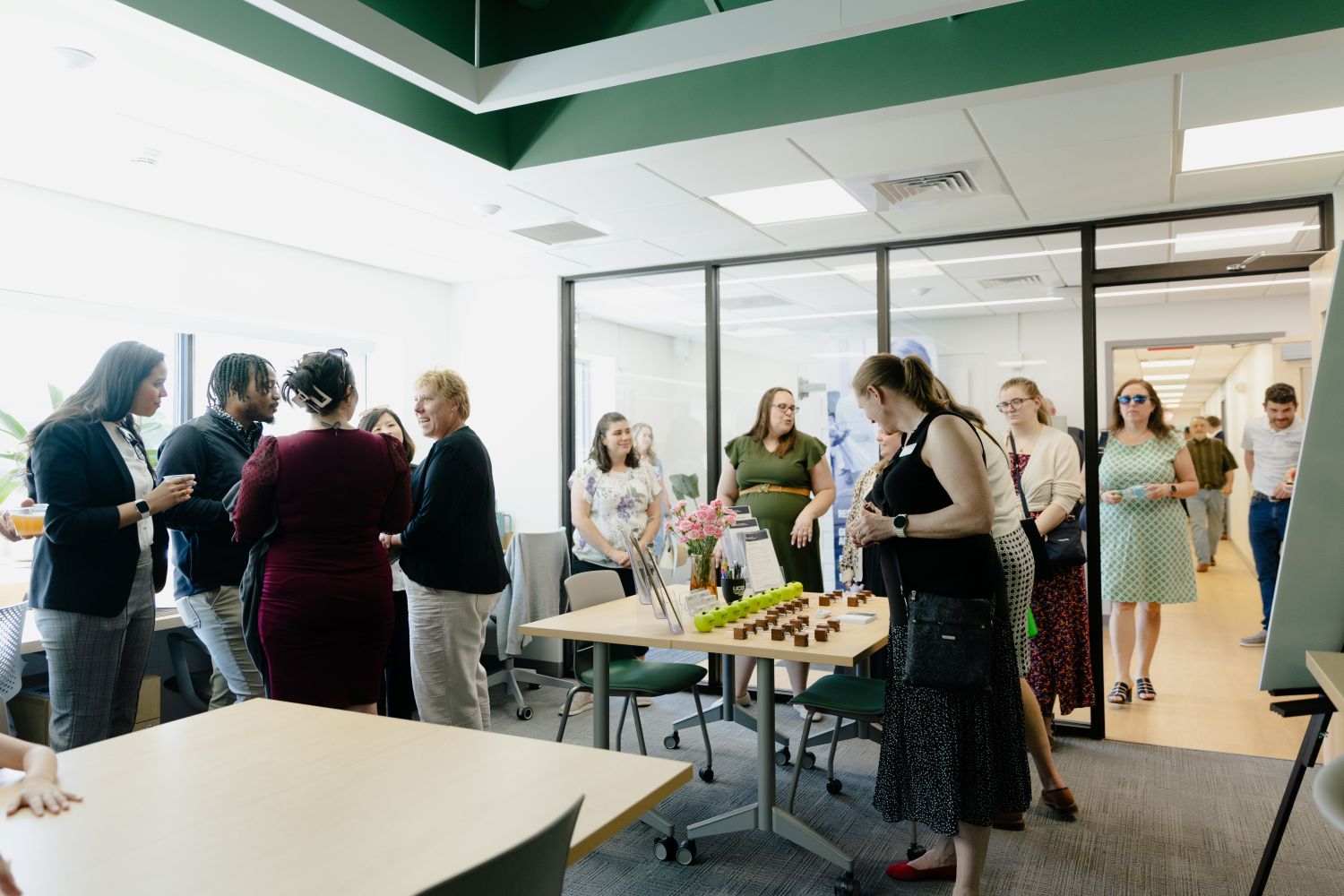
The University of Connecticut community, state legislators, and special guests gathered on Thursday, June 4, for a ribbon cutting ceremony to officially mark the opening of the George Leigh Minor Plant and Soil Health Center.
The space brings together UConn’s public-facing agricultural services, helping residents, farmers, and other industries with essential services such as plant diagnostics, soil analysis, and science-based solutions. It also establishes a hub for researchers to address critical agrarian issues facing our state and nation, supported by a flexible, collaborative laboratory space for the College of Agriculture, Health and Natural Resources (CAHNR).

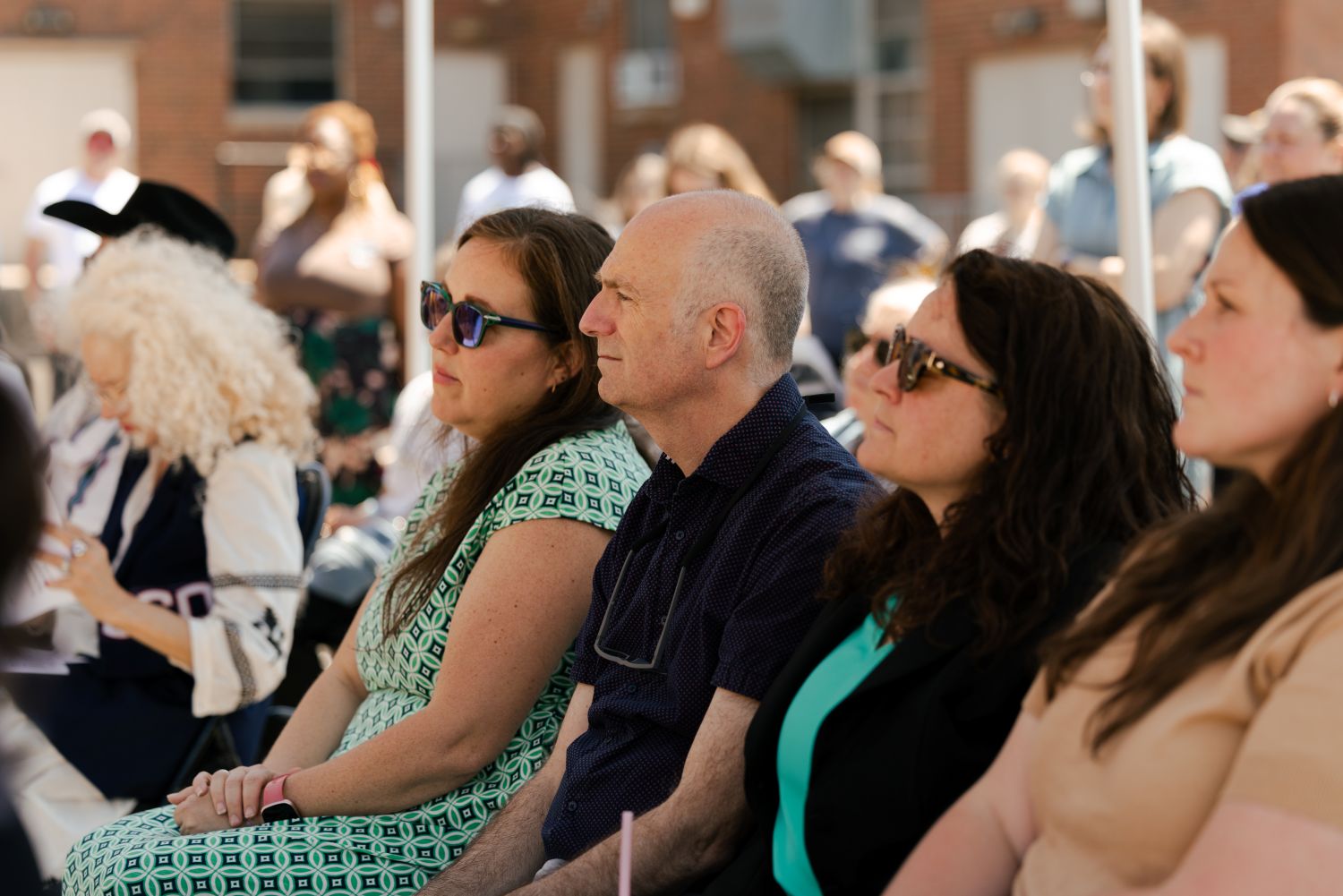
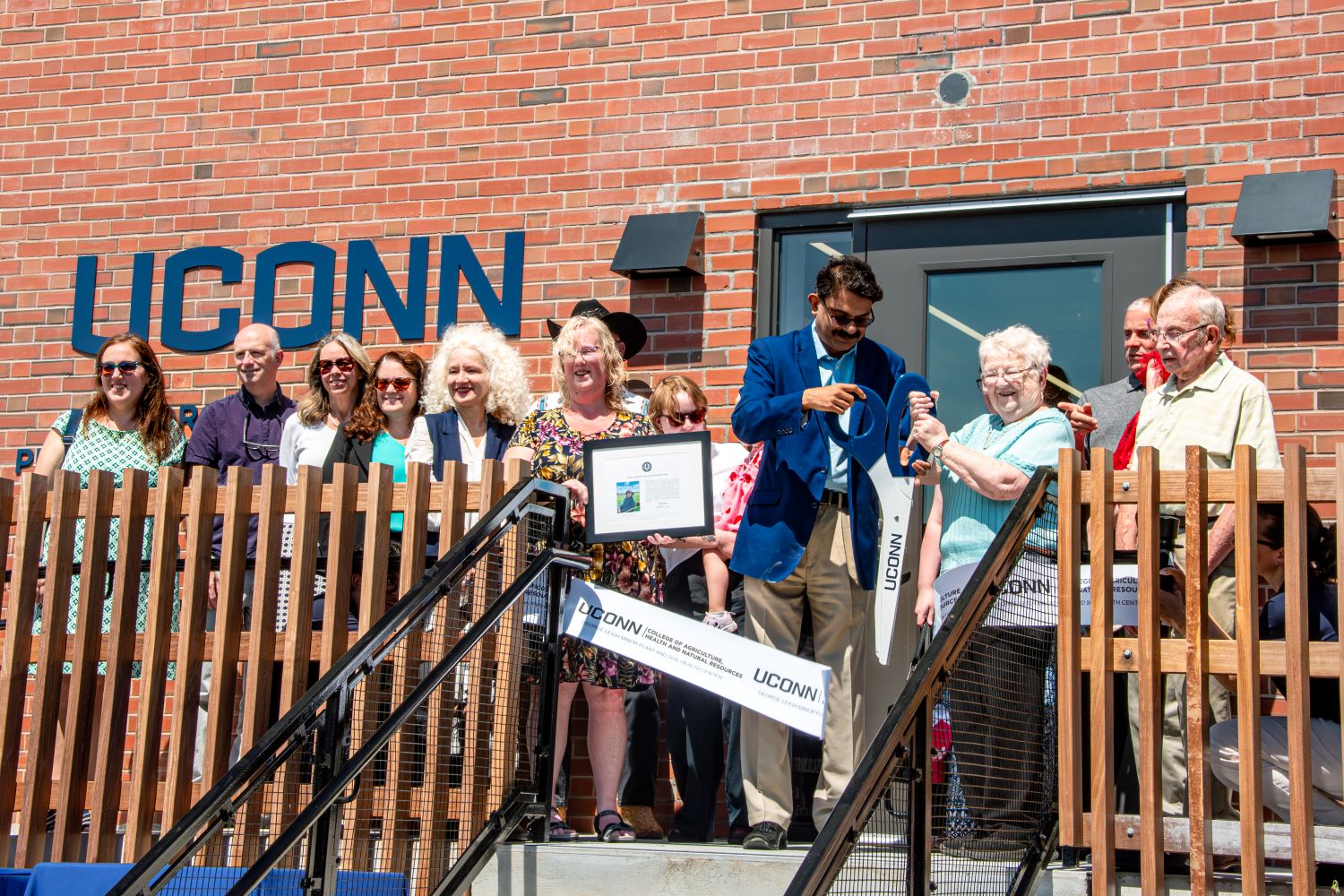
“George lived modestly, saved carefully, and invested with a single purpose: to give back to the university he loved,” said Radenka Maric, UConn president in her remarks. “I want to give my deepest thanks to George Leigh Minor for his generosity and his belief in this institution. We are gathered because of George and all of you who believe in UConn, in hard work, and in the mission of the university to educate and serve its citizens.”
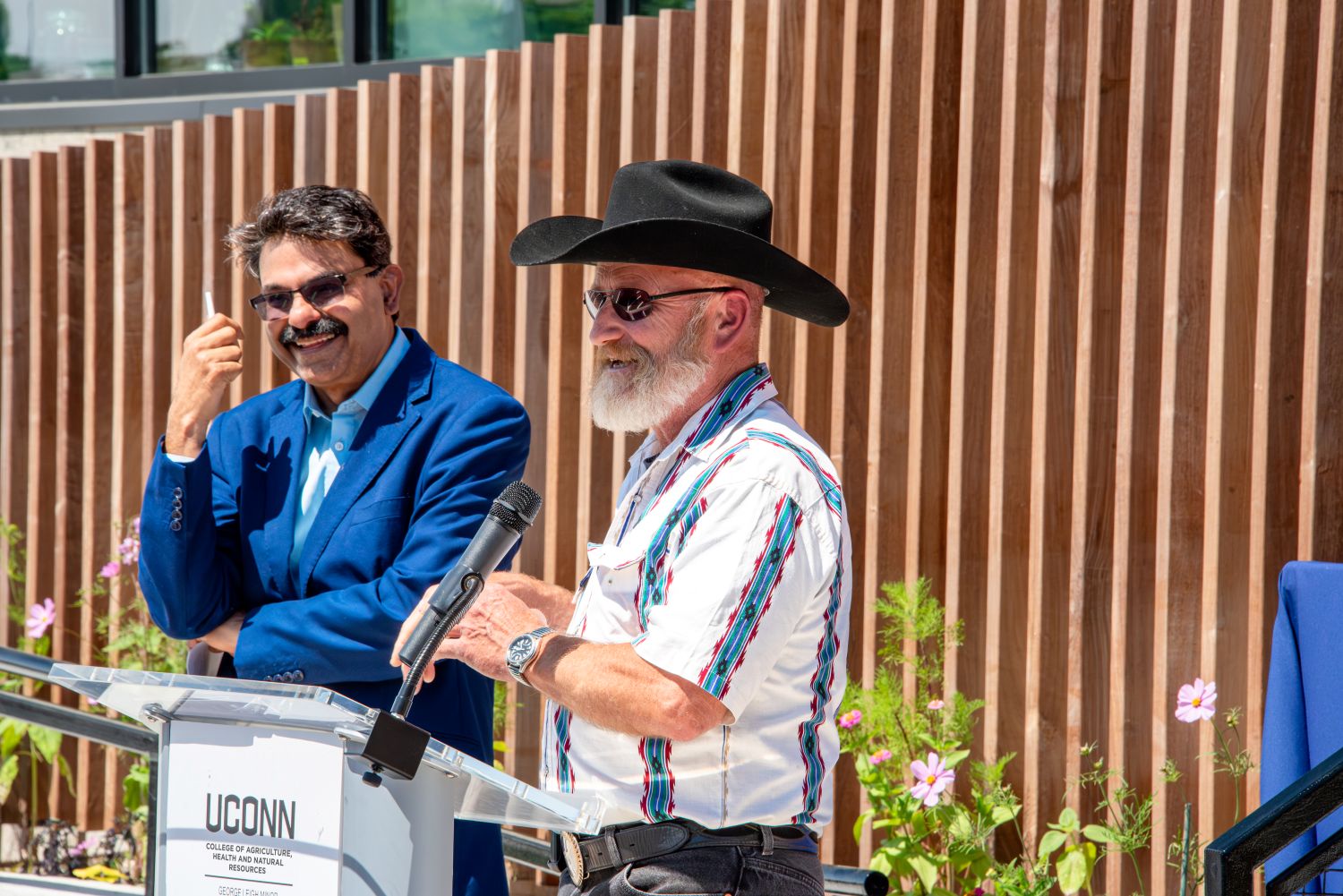
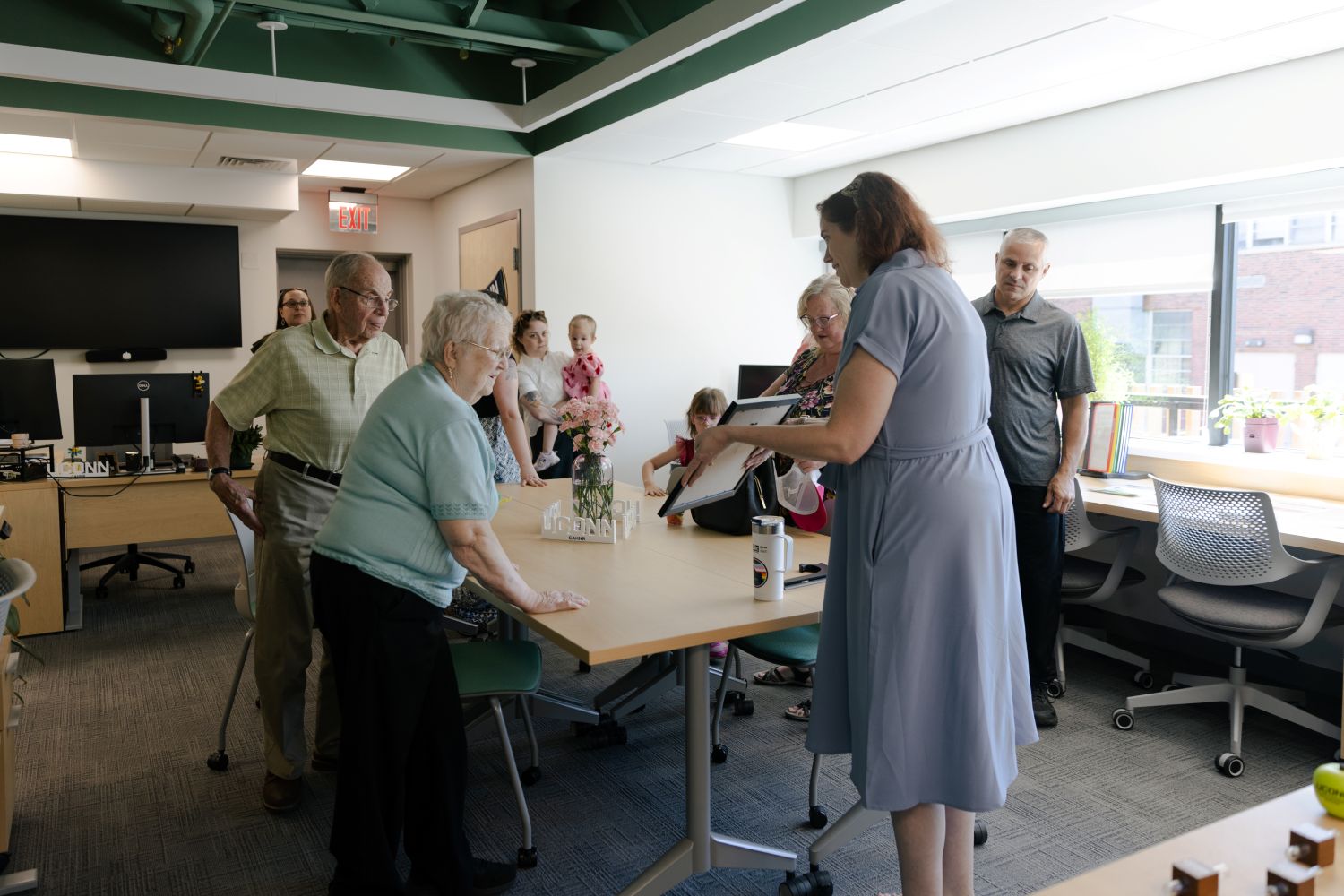
A transformational gift from George Leigh Minor ’56 (CAHNR), a lifelong farmer who passed away at age 90 in January 2025, made possible the renovations needed to establish the center in the annex of the Roy E. Jones Building. With his family present, including sister Elizabeth Baker and niece Linda Hart, close friend Jim Murdock spoke about Minor’s life, personality, and values.
“Everybody who uses this facility should understand what George gave to make it possible,” said Murdock. “He was a quiet person, but what he did here speaks volumes. He would be proud of what this center represents for the future.”
At UConn, Minor learned new farming techniques and brought the knowledge back to his family farm where he oversaw the dairy farm and sawmill. Minor’s father, Leigh Minor, also attended UConn, graduating in 1916.
His family and friends describe George as hardworking and frugal. Minor proudly called himself “Uncle Scrooge,” living modestly and investing in stocks, which he passionately followed. On Sundays, he’d take a day off from farming to enjoy a ride with family. He frequently visited the UConn Dairy Bar on these trips.
“George Minor’s gift strengthens the work of scientists and ensures a safe, sustainable food system from the soil to the supply chain,” said UConn Foundation President and CEO Amy Yancey. “Gifts of this size are rare in the agricultural sciences, and they are essential to advancing our land-grant mission.”
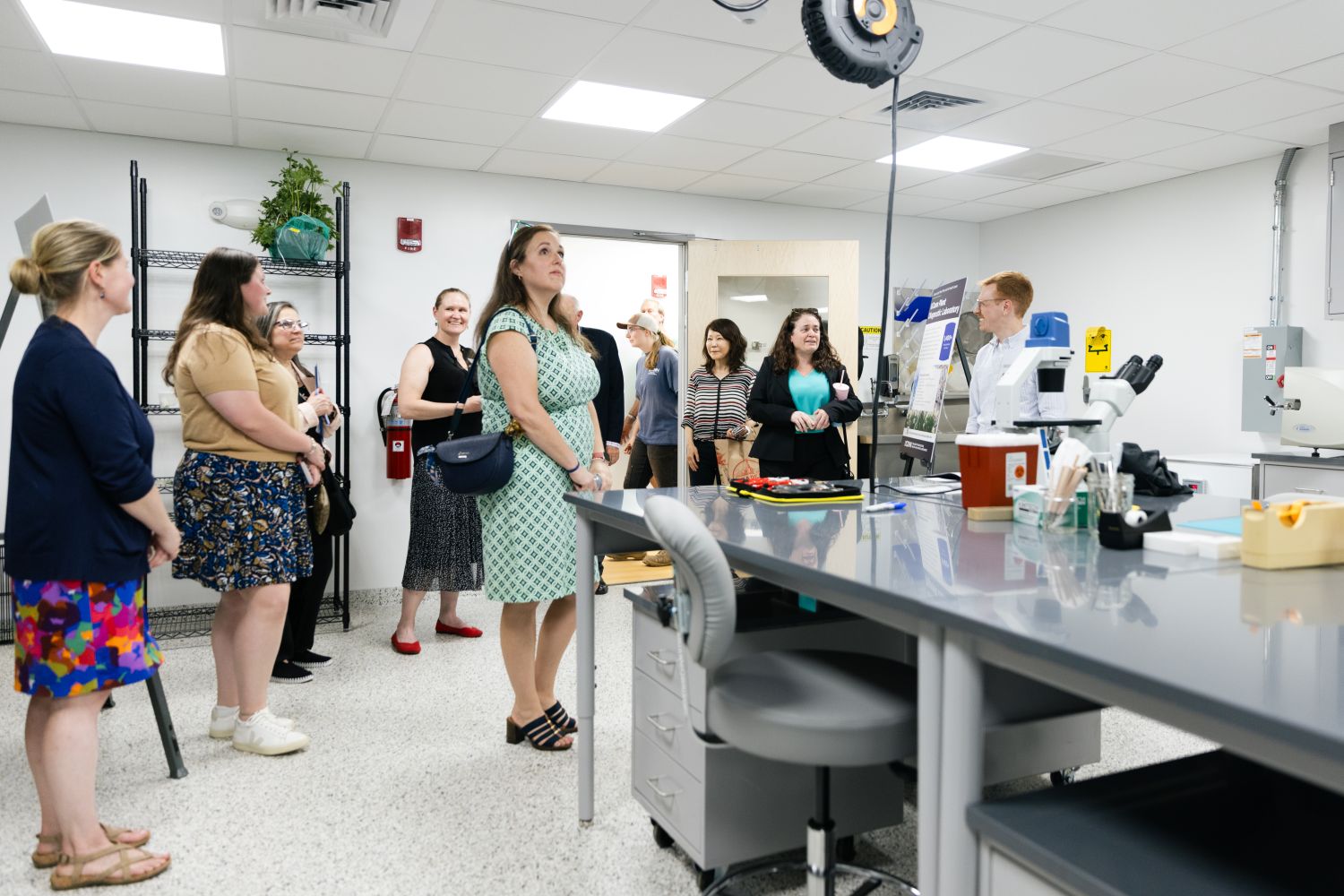
The George Leigh Minor Plant and Soil Health Center co-houses the Home Garden Education Office, Plant Diagnostic Lab, Soil Nutrient Analysis Lab, and the Turfgrass Disease Diagnostic Laboratory, into a new indoor/outdoor public learning space that integrates research, teaching, and extension to fulfill UConn’s three-part mission as a land-grant university.
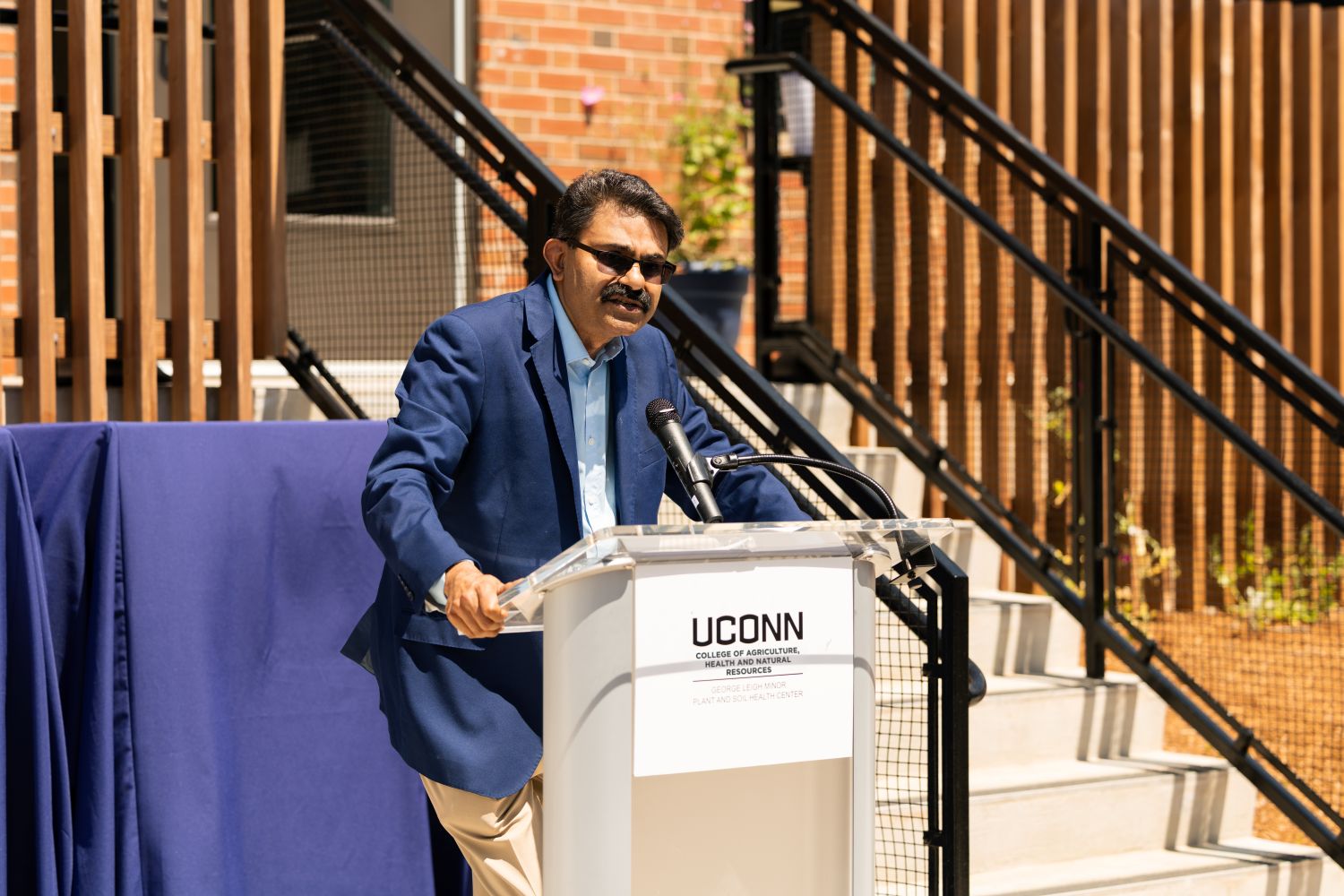
“This space represents both innovation and tradition, and the deep connection between our college and the communities we serve,” said Kumar Venkitanarayanan, dean and director of CAHNR.
Collectively, these centers process over 14,000 soil samples, 350 plant diagnostic reports, and countless phone calls and in-person visits to serve the public and the agricultural industry of our state each year.
“This is yet another reason why UConn is so important to the future of the state of Connecticut,” said State Senator Mae Flexer ’08 (CLAS), whose district includes Mansfield. “It highlights the university’s critical role in advancing research and serving communities across Connecticut.”
Flexer was joined by State Representatives Gregg Haddad ’89 (CLAS), who serves Mansfield, and Tammy Nuccio, who represents Tolland, Willington and Vernon. US Senator Chris Murphy was unable to attend the event, but he sent words of congratulations:
“This special occasion is a testament to the profound impact alumni like George Leigh Minor can have across by upholding a legacy rooted in service, scholarship, and innovation.”
The center features demonstration gardens and displays that highlight a variety of soil types and plants, along with dedicated spaces for the public to learn about emerging plant pests and pathogens, and access to diagnostic services to improve plant production.
By bringing these resources together in one location, students can more easily engage with every aspect of plant and soil health from hands-on learning and research to public outreach.
“George Minor was a proud UConn graduate, a lifelong farmer, and someone who believed strongly in education, agriculture, and service,” said Venkitanarayanan. “We are honored to carry forward George Minor’s legacy through this center.”
This work relates to CAHNR’s Strategic Vision areas focused on Ensuring a Vibrant and Sustainable Agricultural Industry and Food Supply and Fostering Sustainable Landscapes.
Follow UConn CAHNR on social media