Dear Colleagues,
I hope you are enjoying the change in weather. My update this week is briefer than usual but please hold the date for my next town hall: Wednesday, June 10, at noon in Keller auditorium (and also virtual). A lot has happened since our last town hall in March, and the June 10 town hall will occur after our last board meeting of the fiscal year, so I will have a lot to report. Please attend if you can, and I invite you to submit your questions for my leadership team and me to thquestion@uchc.edu.
Legislative session wrap up: As you know, the legislative session ended on May 6, and as I communicated in my May 1 update, our main agenda item was that UConn Health (and UConn) receive funding to offset the 4.5% SEBAC (State Employees Bargaining Agent Coalition) negotiated wage increases for FY 26 and FY 27. For UConn Health this increase totals $55.7 million (to cover both FY 26 and FY27), and for UConn Storrs $37.1 million. Unfortunately, we didn’t receive the funding we requested, which leaves a gap we must fund in FY27. The senior team and I will meet shortly to discuss our “Project Thrive 2.0” (cost and revenue approaches) to balance the budget for FY 27. I want to emphasize here that even though we did not receive what we requested, we are extremely thankful to the governor and the legislature for the great support they provide to UConn Health, and the UConn Health Community network. An example of this, announced by the governor last week, was the $35 million (allocated to UConn and UConn Health) to offset federal research cuts. Another example is the $390 million provided for the UConn Health Community Network. Thank you, Governor Lamont and the legislature!
Still on the topic of support, one piece of good news from this legislative session is that the legislature approved moving previously authorized bond funds for FY24, FY25, FY 26, and FY 27, from the usual state process to the successful and well established UConn 2000 Act (now in its 36th year).
Just as background, “bond funds” are state funds allocated for non-salary purposes such as building deferred maintenance, renovations, information technology security, infrastructure and equipment. Without going into too much detail, when the general assembly approves bond funding requests for UConn Health, UConn Health must then request the state administration place the approved projects on a state bond commission agenda for allocation and authorization. If placed on an agenda, the State Bond Commission then approves the item. The State Bond Commission has been meeting between three and four times per year and there is no guarantee if or when a UConn Health request will be placed on an agenda for action.
Among the benefits of moving these funds from the standard state bonding pipeline to the UConn 2000 program, which is a pre-authorized programmatic bonding framework with an annual approval (through the University Board of Trustees, the Governor and Treasurer’s offices), are that it simplifies the process, eliminates the need to return repeatedly for project-by-project approval; streamlines approvals under an already-established governance and oversight structure specific to UConn 2000; shortens the timeline between authorization and access to funds; and provides greater predictability and flexibility in meeting our capital needs.
Switching gears, this week Tom Vaccarrelli, VP of facilities development and operations, and I presented to the Building and Grounds Subcommittee of the Board of Directors. We talked about some recently completed projects such as our Torrington multispecialty clinic, which opened on March 4, and our new Central Sterile Supply Processing area that was completed on April 27, but we also discussed plans for the future, which include a space master plan that is being developed with consultants from HKS. This space master plan will incorporate a space utilization study and the many departmental and enterprise-level strategies from our recently concluded strategic plan.
Our UConn Health Community Network is progressing well. The recent Waterbury Regional Chamber Mayoral Luncheon included a celebration of the University’s growing presence in Waterbury, including remarks from UConn Health Waterbury Hospital President Deborah Weymouth, UConn Waterbury Dean and Chief Academic Officer Fumiko Hoeft, and Mayor Paul Pernerewski. The message was one of growing programs, job creation, and investments in the future of the community, and we’re proud to be a part of it.
As for Bristol Hospital and Day Kimball Hospital, we have signed letters of intent and expect they will join the UConn Health Community Network by the end of this calendar year.
If you’ve been following world news, you’ve heard of growing concerns about a rare strain of Ebola virus in Africa. While the World Health Organization does not see this outbreak as a threat in our part of the world at this time, I think it’s important to know that we at UConn Health have been taking steps to ensure we are prepared in the unlikely event we get a patient suspected of carrying any such pathogen that is highly contagious and requires specific measures.
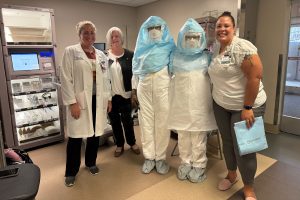
Our leaders in infection prevention have been monitoring the situation and discussing regularly. We’ve had ongoing training in donning and doffing of personal protective equipment (PPE) for full barrier isolation. Our respiratory program and emerging infectious diseases coordinator, Erica Gomez, works closely with our regional contacts at the National Emerging Special Pathogens Training and Education Center, and was among those representing UConn Health at a regional tabletop exercise along with the Department of Public Health, Farmington Health District, Hartford Hospital, emergency medical services, Mass General, and the Administration for Strategic Preparedness and Response, the federal agency that coordinates public health and medical preparedness, response, and recovery for emergencies and disasters.
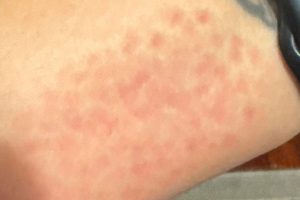
We also have held some secret patient drills, in which an employee disguised as a patient with measles symptoms (including with makeup to mimic a measles rash) presented in our ED and urgent care. Erica reports that about a week later, a patient in the ED was being ruled out for measles and “the staff felt very prepared.”
Kudos to Erica and our infection prevention team!
I have a patient letter to share with you that tells of UMG telecom operator Pam Veilleux’s extra effort, which went a long way to help a patient (edited for length and privacy):
Dear Dr. Agwunobi,
I wanted to share with you a recent experience regarding one of your employees.
My mother is a patient of Dr. Alam in the Geriatric Division. I recently looked up her name on the internet and called the number listed. The employee who answered was Pam.
I had two questions for the office. One was regarding a form I needed signed, which she directed me what to do and even offered to have the office fax it to the appropriate place. Secondly, I needed help transitioning a prescription my mother had gotten from a previous provider. Pam looked everything up and answered all my questions regarding the prescription process, and even sent the request to the provider.
In the course of our conversation, it came out that I had inadvertently been routed to the Internal Medicine Division, and Pam wasn’t even an employee of the geriatric office.
My interaction with Pam and her help exemplifies why UConn has been such a positive experience for my mom.
As my mom has gotten older, we have transitioned all of her care to UConn because of its proximity to us and the convenience of having everything in one location.
It is employees like Pam that only solidify what a great choice it was. She could’ve easily said, “You’ve gotten the wrong department,” but instead she went above and beyond, and I greatly appreciate it. Please share with her supervisors how helpful she was.
Indeed it would have been very easy for Pam to just pass off this caller, but she took the time to help this patient’s daughter even though it wasn’t necessarily “her job.” The result? Further validation of this family’s decision to bring all this patient’s care to us.
Thank you to Pam for being a shining example of service. Your interaction with this family member had such an impact she took the time to write me about it, which is a tremendous compliment.
And thank you to everyone reading this for the work you do every day.

Andrew C. Agwunobi, MD, MBA
Chief Executive Officer
EVP for Health Affairs
UConn Health
Dear Dr. Andy
Since you’ve returned to UConn Health my colleagues have noticed wonderful recognition of providers/staff in the departments of Surgery/Orthopedics/Hem-Onc/OB-GYN. Noticeably, these are all providers with inpatient services that have gotten visibility from your office. Is there any reason that internal medicine (hospitalist section) seems to get overlooked?
Thank you for writing and for sharing this perspective.
My sincere apologies for any oversight on my part in terms of giving hospitalists well-deserved recognition. I deeply value and appreciate the work of our internal medicine hospitalist teams. Your physicians provide extraordinary care for some of our most complex patients and play a critical role in the day-to-day care, continuity, and quality of care across UConn Health. Also many may not be aware of this, but my wife is a hospitalist (Kaiser Permanente) and over the years I have come to appreciate that hospitalists are the heroes behind any hospital’s inpatient success. I recognize the tremendous dedication, professionalism, hard work and impact of your teams, particularly given the demanding nature of inpatient medicine.
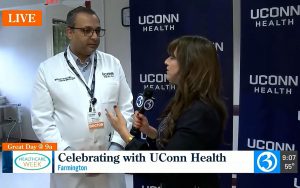
As you may recall, earlier this year we opened a short-stay unit on CT-7. A short-stay unit is a combination of inpatient and observation patients who are admitted for three days or less. The launch of ours has been a significant achievement for our team and reflects our commitment to improving patient flow, throughput, and quality of care. Transitioning from an overflow unit to an established short-stay unit has allowed us to better serve our patient population by providing timely, efficient, and patient-centered care while supporting safe discharges and reduced length of stay. Our hospitalists are an especially instrumental part of this. I’m happy to say that CT-7 was one of the areas that got a surprise visit from Channel 3’s “Great Day CT” during Healthcare Week last week.
Thank you again for reaching out and for all that you and your colleagues do in service to our patients and institution.
Have something you want to ask Dr. Andy? Submit your question on The Hub.
Hub Highlights

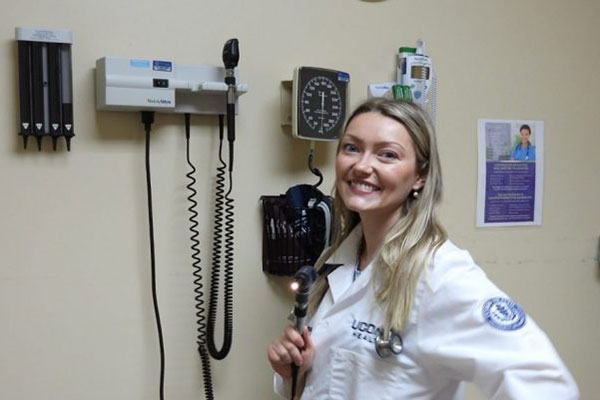
Read a feature about Barbara and Peter Setlow’s generous legacy to support scientific careers.
Our medical students start their clinical rotations throughout Connecticut.
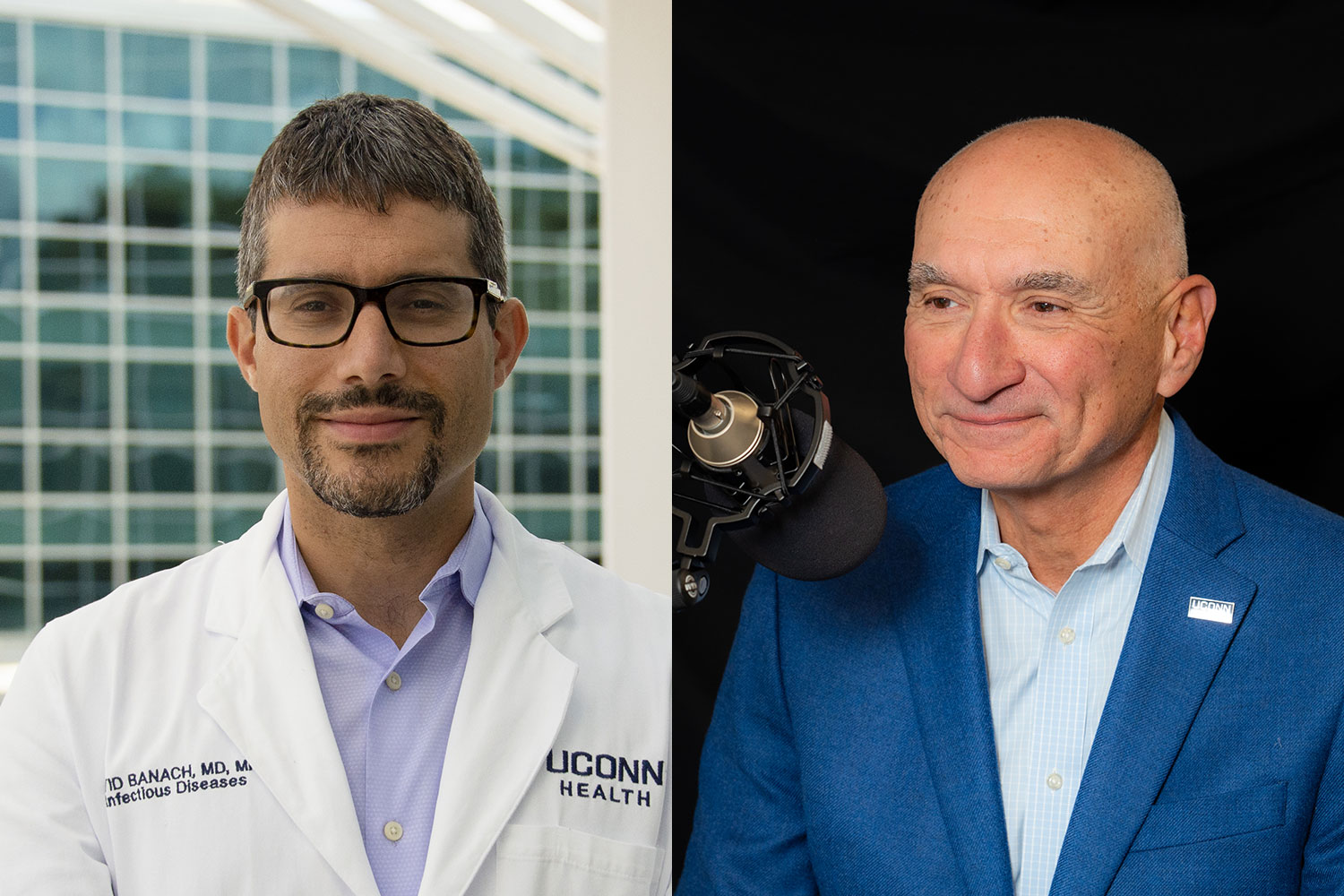
Dr. David Banach gives an update on the hantavirus outbreak on the latest Healthy Rounds Podcast.
Visit the Hub Now
Note: Unlinked content is only available on The Hub, for which you must be on the UConn Health network to access.
You may think you’re allergic to penicillin even if you really aren’t. Our infectious diseases experts explain.
Plus, watch a video about our recent memorial service to honor those who donate their bodies to our Human Anatomy Lab.