Research & Discovery

Innovative Therapeutic Program Helps Those Living With PTSD
Professor Julian Ford created TARGET, an educational and therapeutic approach that explains why PTSD develops and how it can be overcome.

Statistically, Not Enough People Take Statins
Too many people are taking aspirin for heart health when it may not be effective for them.

Rethinking Care for Older Adults with Alzheimer’s Disease and Related Dementia
Two UConn researchers will study how well state programs provide care for older adults living with dementia while remaining at home.

Meet the Researcher: Jeff Hoch, School of Medicine
Hoch, a professor of molecular biology and biophysics, sees tremendous potential waiting to be unlocked by his research.

Cytokine Storms Can Kill. Researchers Found the Protein that Sparks Them
Researchers at UConn Health have made a discovery that offers insight into a disease that kills roughly 270,000 Americans every year.

Discovering What Makes This Toxin Even Worse Than Diarrhea
UConn Health researchers have gained new insight into a particularly nasty strain of E. coli bacteria, which might lead to more effective treatments for this potentially deadly ailment.

UConn Researcher Developing Rapid COVID-19 Testing
UConn researcher Bahram Javidi is developing a rapid, portable method of testing for COVID-19 that could be a boon to health care providers and patients alike.

Research Proves Viability of Injection-free Microneedle Technology for Single-Administration of Vaccines
UConn researchers have demonstrated the effectiveness of a microneedle technology that could make widespread vaccination easier and more effective.

Unique Schwann Cells: The Eyes Have It
UConn Health neuroscience researchers are finding genetic properties of what are known as Schwann cells in the cornea that may hold the key to breakthroughs in sensory function, healing, and even regeneration.
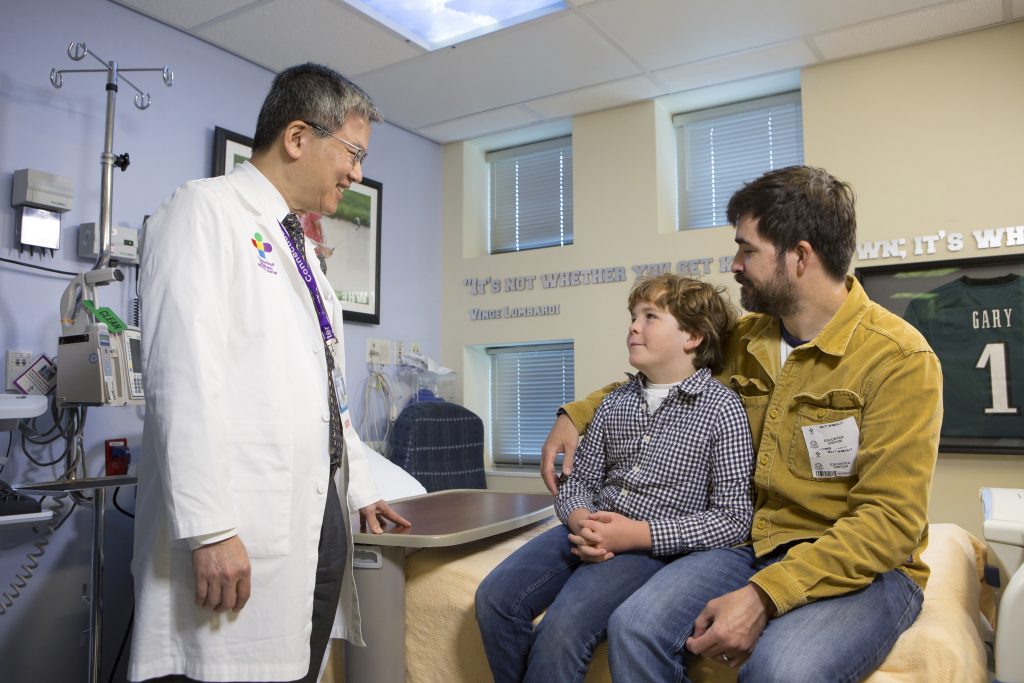
Pediatric Brain Cancer Research Reveals Potential for New Therapies
“We are all very excited about this finding,” says Dr. Ching Lau of UConn Health/JAX and Connecticut Children’s. “The take home message of these findings is that the fusion protein is altering the behavior of the tumor cells by dictating the genes that will be turned on and off. This gives us a better handle on which aberrantly expressed genes to target in developing novel therapeutics against supratentorial ependymoma.”