UConn Health

Aged DNA May Activate Genes Differently
New UConn Health/JAX GM research shows that as we age, some sections of our chromosomes curl and close up, making it harder for cells to access genes critical to defending against disease.
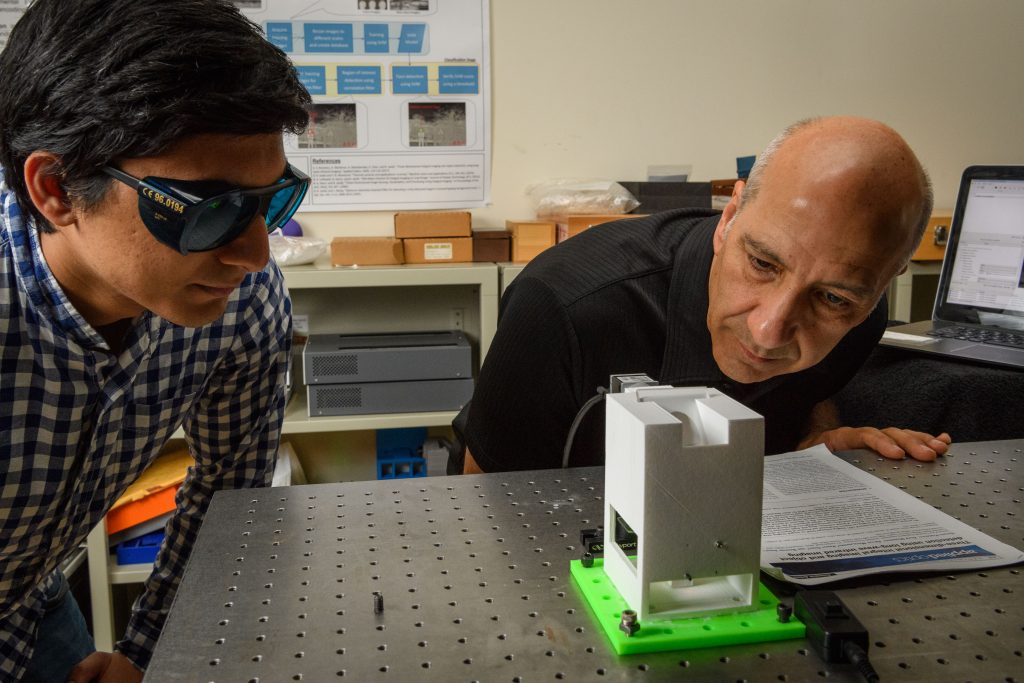
Portable Microscope Makes Field Diagnosis Possible
A portable holographic field microscope developed by UConn optical engineers offers medical professionals a fast and reliable tool for the identification of diseased cells.

Higher Breast Cancer Risk in Western Parts of Time Zones. Is Electric Light to Blame?
On a societal level, position in a time zone affects how early a person must turn on the lights in the morning.

A Breast Cancer Survivor’s Lifelong Marathon
Genetic counseling was critical to Elizabeth Johnston's personalized cancer care plan at UConn Health, where she has been successfully treated for breast and lung cancers and continues to be monitored for potential future cancers.

International Student Embraces Research Opportunities at UConn
Colombia native Brian Aguilera '19 (CLAS) was one of a select group taking part in a new research program for undergraduates to work with faculty at UConn Health.

Cell Modeling Tool Makes Complex Calculations User-Friendly
The Virtual Cell, or VCell as it’s known at UConn Health, is a software platform that offers the most comprehensive set of modeling and simulation capabilities for cell biology in the world.

Experts Report Decline in Childhood Obesity in Hartford
“We know that weight is a leading indicator of long-term health," said Hartford Mayor Luke Bronin.

ER Doctor in Puerto Rico Reports on Hurricane Devastation
'Every single person is affected,' says UConn Health's Dr. Robert Fuller.

Science in Seconds: UConn Health’s 3-D Print-out of Brain
Using brain scans and a 3-D printer, a UConn team made a life-size model of the arteries surgeons must navigate to pull blood clots from stroke victims.

UConn Medical School to Lead National Safety Training
'To be recognized by our accrediting organization for leading the way and already demonstrating processes that promote patient safety and quality means a great deal to all of us,' said Dr. Kiki Nissen of UConn School of Medicine.