UConn Health

UConn Health’s New 3-D Printed Model Allows Brain Surgeons to Practice
A team of researchers at UConn Health converted MRI brain scans into something a 3-D printer could interpret, enabling them to print an inexpensive, true-to-life teaching model of the brain’s major arteries.
New Device for Testing Heart Health
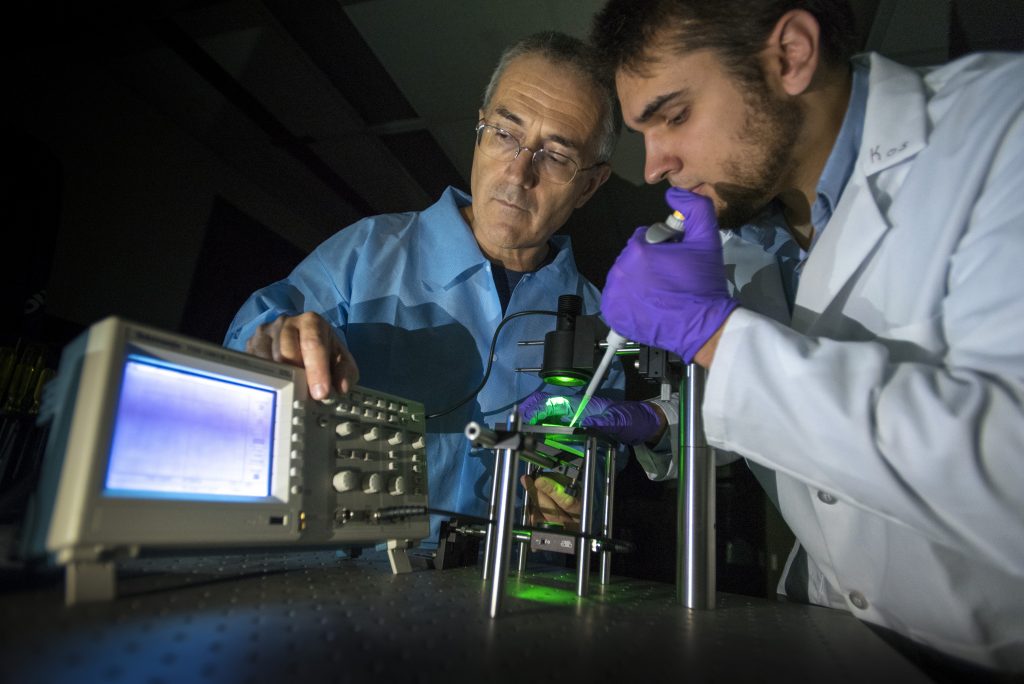
UConn engineering researchers have developed a device to test an important indicator of heart health that is often ignored – blood viscosity.

Work-related Illnesses in Connecticut on Decline
The most common work-related illnesses in the state are musculoskeletal conditions such as carpal tunnel syndrome, according to a new state report by UConn Health experts.

Evidence Supports Link Between Breast Cancer, Light Exposure at Night
Artificial light has transformed the night sky, a change researchers continue to link to health problems.

Dyes Detect Disease through Heartbeat Signals
UConn Health researchers who developed voltage-sensitive dyes with potential in the field of drug discovery have launched a startup to spread their discovery beyond academia.

New Program Pairs Undergraduates with UConn Health Researchers
Forty UConn undergraduates in the Health Research Program worked with scientists at UConn Health this summer to explore different fields of medical research.

Summer’s Most Stressful Three Words: ‘Back to School’
A UConn Health psychiatrist offers advice for parents whose kids are anxious about going back to school.

Science of Learning Project Wins $3 Million NSF Award
Cognitive scientists and neuroscientists at UConn will train 50 graduate students in the science of learning, and how to communicate their research using performing arts and digital media techniques.

New Imaging Test Can Detect Future Heart Problems in Cancer Patients
UConn Health has begun tracking cancer patients with an advanced heart imaging test before, during, and after treatment, to detect potential heart problems early.

The Not-So-Sweet Side-Effects of Artificial Sugars
The leader of the Lifestyle Medicine Program at UConn Health discusses research showing that artificial sweeteners may actually be associated with weight gain and increased risks to heart health.